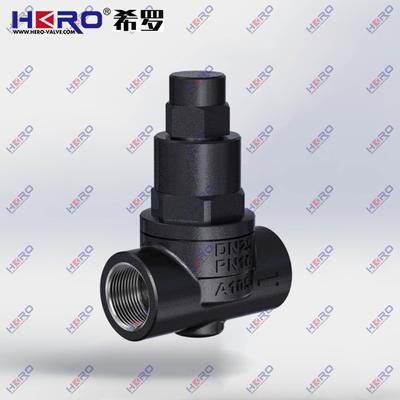
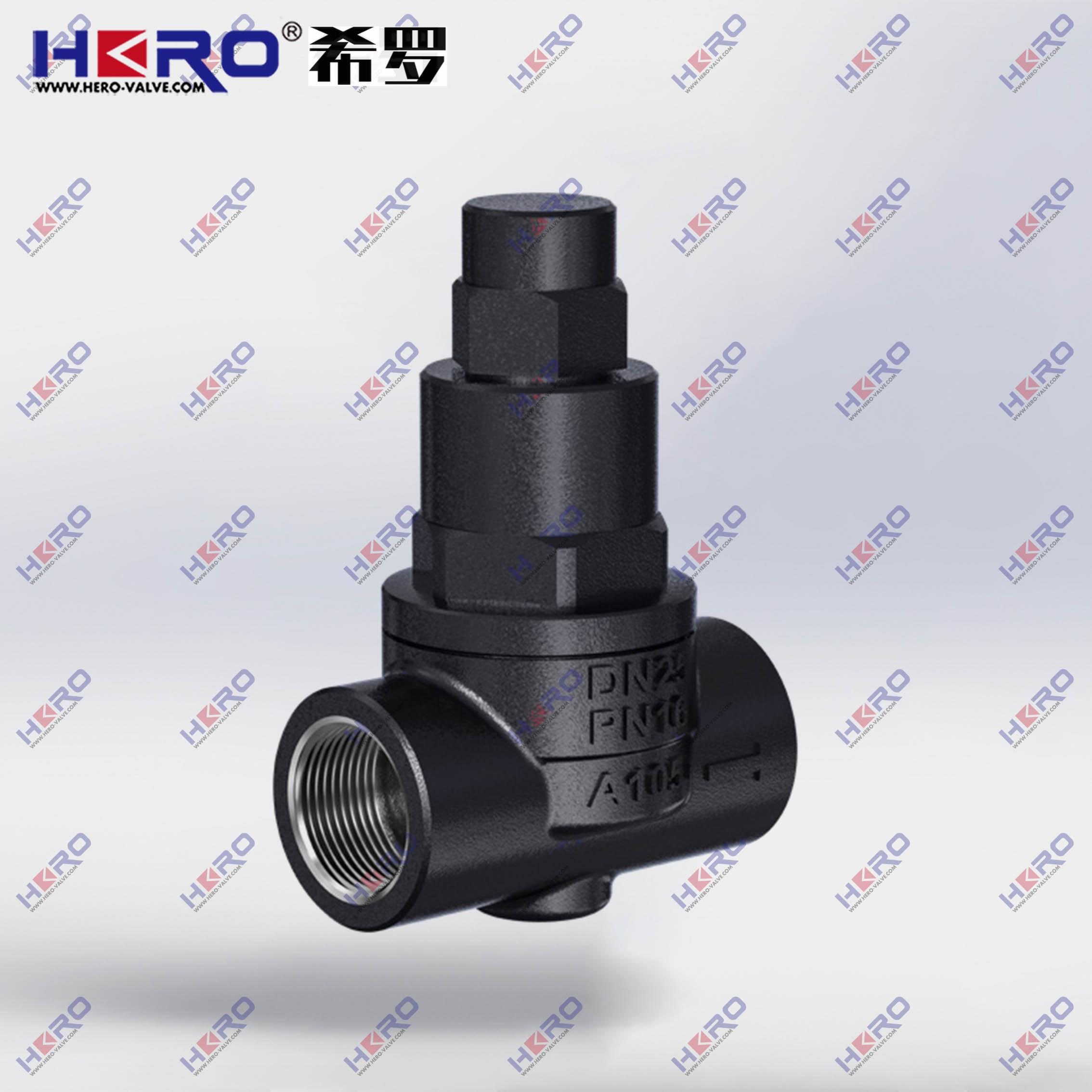
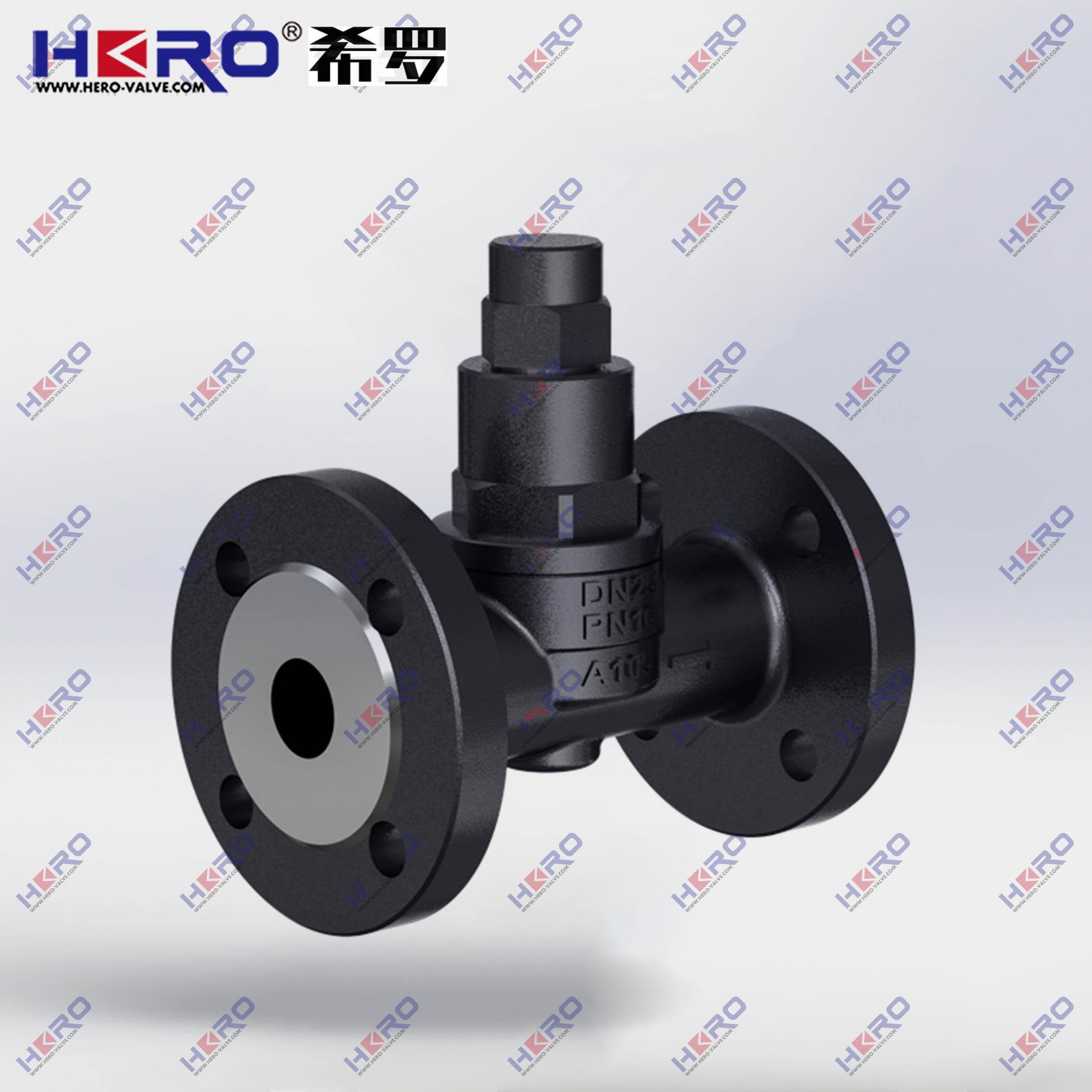
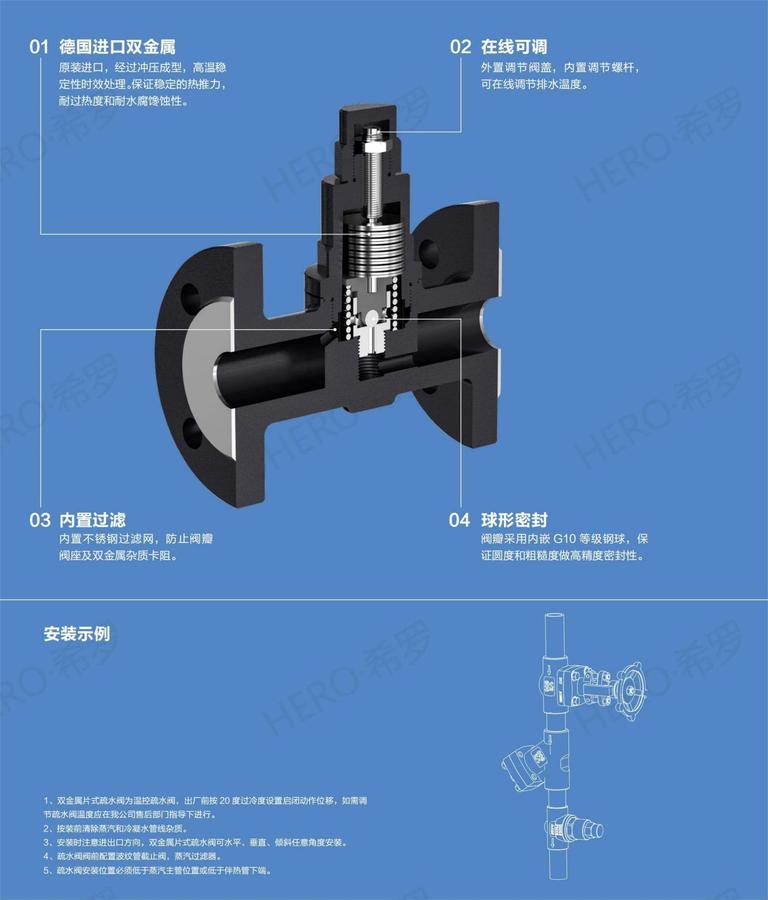
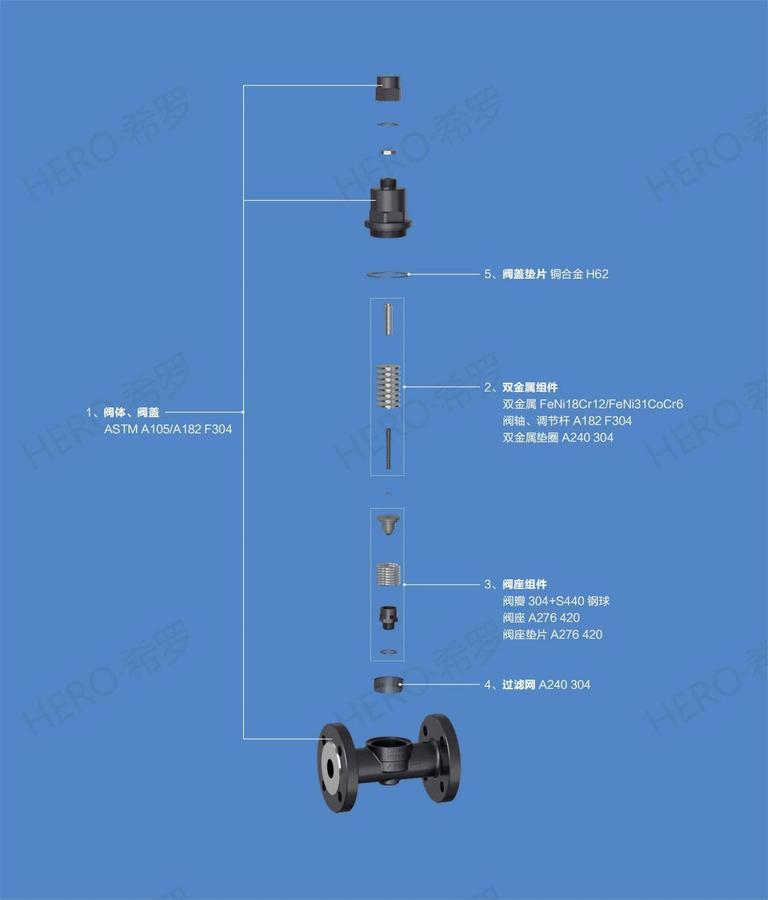
Thermostatic steam traps are devices used in steam systems to automatically discharge condensate and prevent steam leakage. The following is an introduction to them:
Working Principle
Bimetallic Type: It utilizes the characteristic of bimetallic strips deforming when heated. A bimetallic strip is made by laminating two metals with different thermal expansion coefficients. When in contact with steam and condensate, the temperature change causes the bimetallic strip to deform. In a steam environment with a relatively high temperature, the bimetallic strip bends and deforms, closing the valve. When condensate accumulates and the temperature drops, the bimetallic strip returns to its original shape, opening the valve to discharge the condensate.
Bellows Type: It operates based on the pressure change of the temperature - sensing medium inside the bellows due to temperature changes. The temperature - sensing element is usually a bellows filled with a temperature - sensing liquid or gas. At the steam temperature, the temperature - sensing medium expands, causing the bellows to elongate and pushing the valve core to close the valve. When the temperature of the condensate is lower, the temperature - sensing medium contracts, the bellows shortens, and the valve core opens to discharge the condensate.
Diaphragm Box Type: It relies on the vaporization and condensation of the temperature - sensing liquid inside the diaphragm box to control the opening and closing of the valve. The temperature - sensing liquid inside the diaphragm box vaporizes at the steam temperature, increasing the pressure and causing the diaphragm box to expand and close the valve. When it comes into contact with condensate and the temperature drops, the temperature - sensing liquid condenses, the pressure decreases, the diaphragm box contracts, and the valve opens to discharge the condensate.
Structural Features
Temperature - Sensing Element: It is the core component of the thermostatic steam trap, such as bimetallic strips, bellows, and diaphragm boxes. It can accurately sense temperature changes and convert temperature signals into mechanical actions to control the opening and closing of the valve.
Valve Body: Usually made of materials such as cast iron, cast steel, and stainless steel, it has good pressure resistance and corrosion resistance to adapt to different working environments and medium requirements.
Valve Core and Valve Seat: The cooperation between the valve core and the valve seat determines the sealing performance and drainage capacity of the steam trap. Generally, wear - resistant and corrosion - resistant materials are used to ensure good sealing effect during frequent opening and closing processes.
Performance Parameters
Nominal Pressure: Common ones are PN10, PN16, PN25, etc. Different nominal pressures are suitable for steam systems with different pressure levels.
Operating Temperature: Generally, it can work in a temperature range from - 20°C to 250°C or even higher, depending on the material and design of the steam trap.
Drainage Capacity: Depending on different models and specifications, the drainage capacity varies, ranging from a few kilograms to hundreds of kilograms per hour.
Product Advantages
Good Energy - Saving Effect: It can precisely control the discharge of condensate according to temperature, minimizing steam leakage, improving the utilization rate of steam, and reducing energy consumption.
Sensitive Action: It responds quickly to temperature changes and can discharge condensate in a timely manner, preventing condensate from accumulating in the pipeline and ensuring the normal operation of the steam system.
Long Service Life: With a relatively simple structure and no complex moving parts, it is less prone to failure under normal working conditions and has a long service life.
Easy Installation: Generally, it is small in size and light in weight. The installation position requirements are relatively flexible, and it can be installed horizontally or vertically on the steam pipeline.
Application Scope
Industrial Field: Widely used in steam heating equipment, heat exchangers, steam pipelines, etc. in industries such as chemical, petroleum, power, textile, and printing and dyeing to discharge condensate from equipment and pipelines and ensure the efficient operation of the equipment.
HVAC System: In the heating and air - conditioning systems of buildings, it is used for the condensate discharge of steam radiators, steam humidifiers, etc., improving the heating and air - conditioning effects.
Food and Beverage Industry: Used in steam cooking equipment, disinfection equipment, etc. to discharge condensate in a timely manner, ensuring product quality and the hygienic requirements of the production process.