Share to:

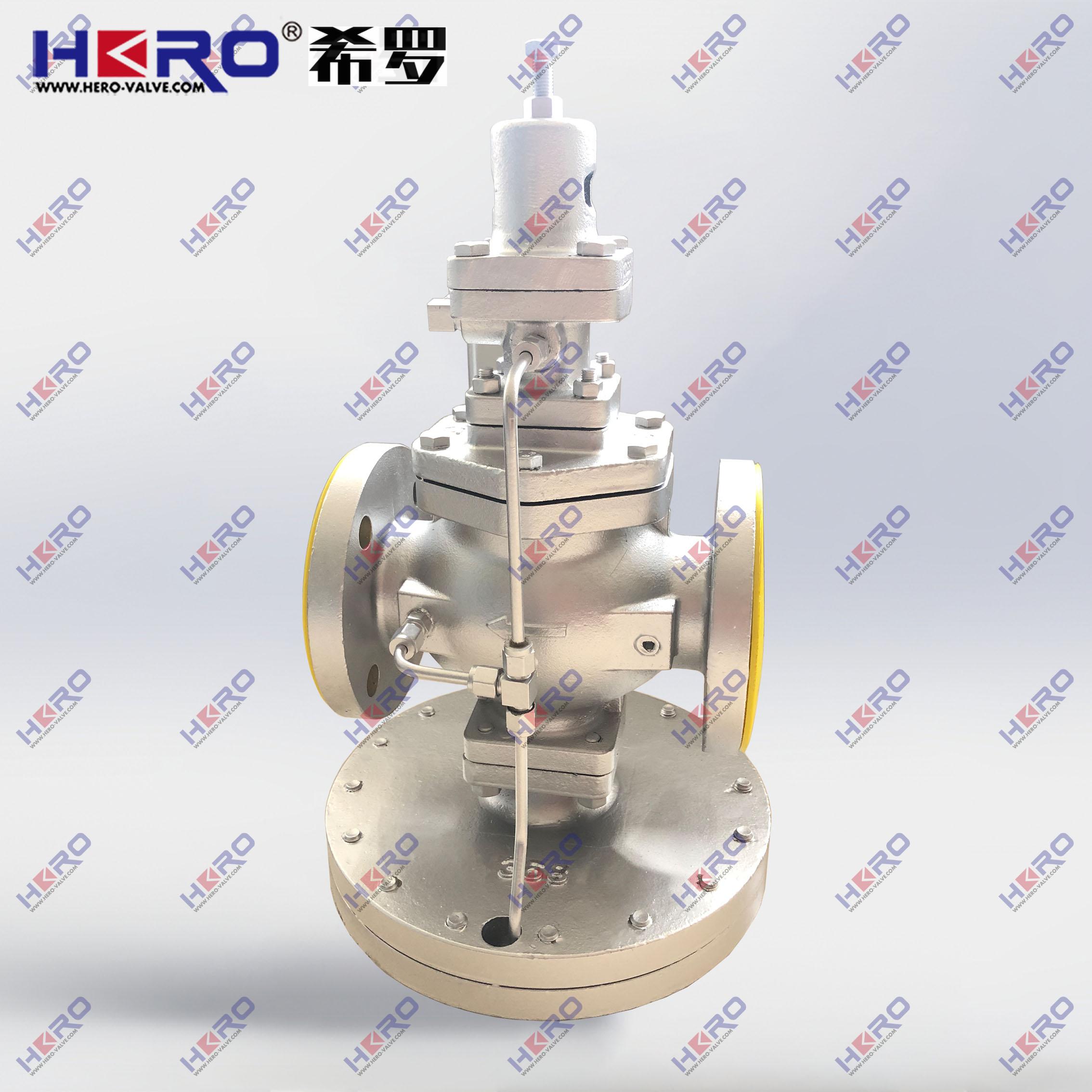
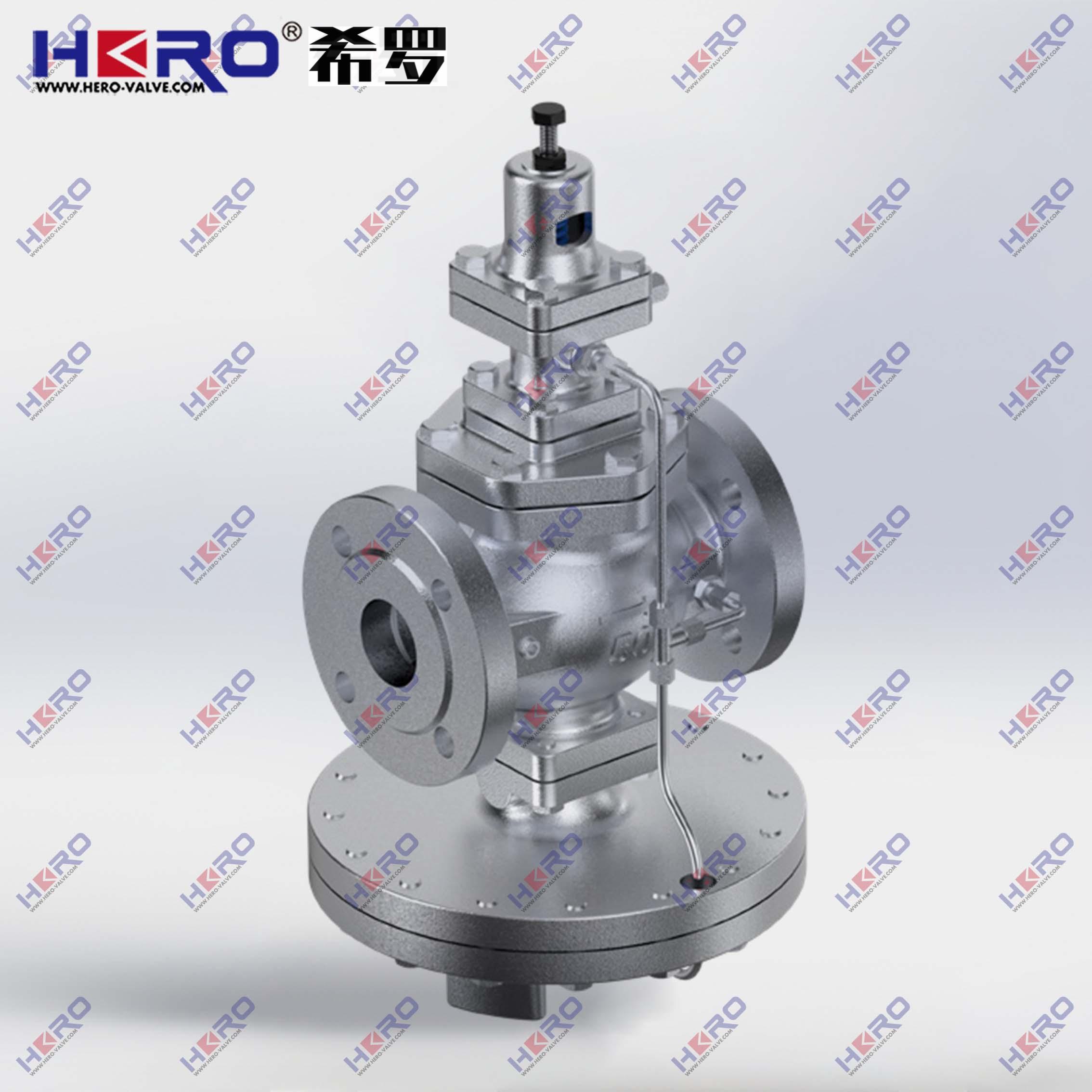
GP2000 Diaphragm PRV.

Brand: HERO
Model: GP2000
Specification: DN15-DN100
Color: Silver/Blue/Black
Material: GGG40/WCB/CF8/CF8M
Design standard: DIN standard, ANSI standard, GB standard
Pressure range: 1.6Mpa-4.0Mpa
Working temperature: -40℃~+600℃
Operating condition: Steam medium
Description


Basic Information


  • Applicable Fluid: Steam

  • Connection Methods: Threaded connection is JIS RC (PT thread); Flange connection is JIS 20K RF flange.

  • Nominal Diameter: For threaded connection, it ranges from 15A to 50A; for flange connection, it ranges from 15A to 150A.


Technical Parameters


  • Primary - side Pressure: 0.1 - 2.0 MPa (1.0 - 20 kgf/cm2G)

  • Secondary - side Pressure: 0.02 - 0.15 MPa (0.2 - 1.5 kgf/cm2G) or 0.1 - 1.4 MPa (1.0 - 14 kgf/cm2G)

  • Maximum Operating Temperature: 220°C

  • Materials: The valve body is made of ductile iron; the main valve seat, pilot valve, and pilot valve seat are made of stainless steel; the diaphragm is made of stainless steel.

  • Maximum Pressure Reduction Ratio: 20:1

  • Valve Seat Leakage: Less than 0.01% of the rated flow


Product Features


  • Large Pressure Reduction Ratio: The maximum pressure reduction ratio is as high as 20:1. What used to require two - stage pressure reduction can now be achieved in one stage.

  • Stable Pressure Control: Due to the large diaphragm and the external detection structure, it can promptly and accurately feedback the subtle changes in the upstream pressure or downstream load to the main valve diaphragm, and then adjust the opening of the main valve, effectively and stably controlling the secondary - side pressure.

  • Strong Flow and Control Capability: It has a large Cv value, and the flow and control capabilities have been greatly improved. Products with a nominal diameter 1 - 2 sizes smaller than the usual ones can also be used.

  • Good Sealing Performance: The valve is of single - spherical shape, with improved sealing performance and minimal leakage.

  • Low - pressure Management: It can manage pressures below 0.02 MPa.


Working Principle


  • When the Output Pressure is Lower than the Set Value: The force on the lower side of the piston is greater than that on the upper side. The piston moves upward, pushing the valve cover upward, increasing the opening of the pressure - regulating valve port. The flow rate of compressed air entering the output chamber increases, and the pressure in the output chamber rises accordingly. When the set value is reached, the forces on the upper and lower sides of the piston are balanced, the piston stops moving upward, the opening of the pressure - regulating valve port remains unchanged, and the output pressure and flow rate remain stable.

  • When the Output Pressure is Higher than the Set Pressure: The force on the upper side of the piston is greater than that on the lower side. The valve cover and the piston move downward together, reducing the opening of the pressure - regulating valve port. The gas flow rate entering the output chamber decreases, and the gas pressure in the output chamber drops. If the pressure in the output chamber is still higher than the set value, the piston continues to move downward until the pressure - regulating valve port is completely closed. If the output pressure is still higher than the set value, the piston continues to move downward, and the overflow valve port opens. The gas in the output chamber is discharged through the overflow valve port. As the pressure in the output chamber drops, the pressure on the lower side of the piston is higher than that on the upper side. The piston and the valve core move upward together to gradually reduce the opening of the overflow valve port. When the output pressure reaches the set value, the overflow valve port closes, the passage between the output chamber and the overflow chamber is blocked, and the overflow stops.


Precautions


  • The pressure - reducing valve must be fixed during transportation. Due to its low center of gravity, inversion is not allowed. When unpacking, do not grasp the stainless - steel pipe; instead, hold the valve body firmly. When moving the pressure - reducing valve, pay attention to avoid the eccentric movement of the adjustment spring of the pressure - reducing valve.

  • The pressure - reducing valve should be installed correctly to meet the requirements of the "Manual for Pilot Diaphragm - type Pressure - reducing and Pressure - stabilizing Valve". The typical installation method should refer to the typical settings of the pressure - reducing station. The steam pipelines before and after the pressure - reducing valve should use clean seamless steel pipes, and all welded parts should effectively remove welding slag and other debris. To prevent flow blockage and ensure smooth flow before and after the pressure - reducing valve, the diameter of the pipeline downstream of the pressure - reducing valve should be increased. The reducer should be an eccentric reducing head to avoid the possible water hammer and erosion caused by water accumulation.

  • A steam - specific filter must be installed upstream of the pressure - reducing valve. The filter screen should be a 100 - mesh double - layer stainless - steel screen. The filter body should be installed laterally to facilitate the removal and cleaning of the filter screen and to avoid water accumulation. For large - diameter filters, they can be installed downward, but a hole should be drilled in the plug to connect a steam trap for drainage. The steam trap should be followed by a union or flange connection that is easy to disassemble for convenient cleaning of the filter.

  • The pressure - reducing valve should be installed on a horizontal pipeline, and the steam flow direction should be consistent with the direction indicated by the arrow on the valve body of the pressure - reducing valve. The flow upstream of the pressure - reducing valve should be as smooth as possible. If external pressure - taking is used, the downstream pressure - taking point should be located at a position 10 times the pipe diameter away from the pressure - reducing valve and more than 0.3 meters away from the front and rear of the valve to avoid inaccurate pressure measurement caused by unstable flow. When the pressure - reducing valve is only used for a single device, the pressure - taking point can be the steam space of the device. A shut - off valve should be installed on the external pressure - taking conduit for easy maintenance, and the sensing tube should have a certain downward slope.

  • Pressure gauges should be installed before and after the pressure - reducing valve. The steam pressure gauge must be equipped with a buffer cooling tube for convenient debugging and pressure display.
    The pipelines connected to the steam pressure - reducing valve should have good support to avoid stress on the steam pressure - reducing valve. The connection between the pressure - reducing valve and the pipeline should use a metal graphite wound gasket. All valves in the pressure - reducing station should be thermally tightened within 24 hours after steam - passing to prevent leakage and erosion at the joints.

  • If the diameter of the pipeline downstream of the pressure - reducing valve is expanded by more than 3 levels, a rectifying and noise - reducing device can be installed.

  • An inverted - bucket steam trap must be installed upstream of the pressure - reducing valve, and a water - collecting pipe should be provided in front of the steam trap. If the steam transportation distance is long, a steam - water separator is recommended. If there is a rising pipeline downstream of the pressure - reducing valve, an inverted - bucket steam trap should also be installed.

  • A bypass can be set for the pressure - reducing valve. The diameter of the bypass valve should be the same as that of the pressure - reducing valve to facilitate the maintenance of the pressure - reducing valve without stopping the steam. At the same time, for convenient maintenance, bellows - sealed globe valves should be installed before and after the pressure - reducing valve. A safety valve should be installed downstream of the pressure - reducing valve. The set pressure of the safety valve should be more than 10% higher than the no - load pressure of the steam pressure - reducing valve to overcome the reseating pressure difference of the installed valve.

website qrcode

企業(yè)公眾號(hào)

 Work Time
Mon to Fri :8:00-22:00
Sat to Sun :9:00-20:00
 Contact Details
TEL::+86-577-6716 0060
E-Mail::INFO@HERO-VALVE.COM
长兴县| 荔波县| 和龙市| 泸定县| 民乐县| 阳泉市| 乌兰浩特市| 抚松县| 浦江县| 宁安市| 辽中县| 阿坝| 玉门市| 南江县| 台山市| 井冈山市| 分宜县| 金华市| 汉沽区| 安西县| 合山市| 淮安市| 绥中县| 清水县| 潮州市| 光山县| 固安县| 洛扎县| 马鞍山市| 盱眙县| 洛川县| 淮阳县| 家居| 祁东县| 牙克石市| 嘉义市| 汶上县| 南涧| 衡南县| 定西市| 句容市|