Share to:

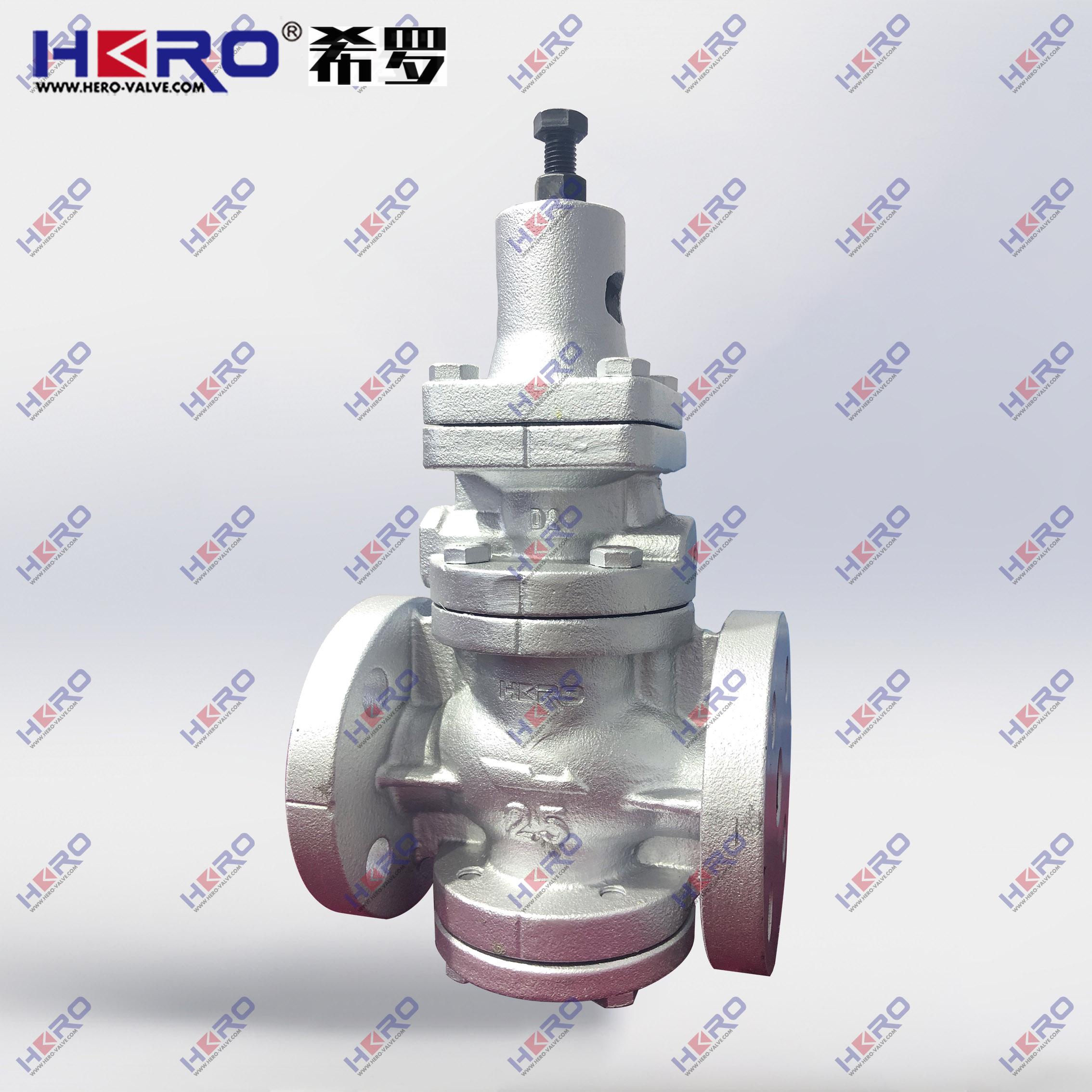
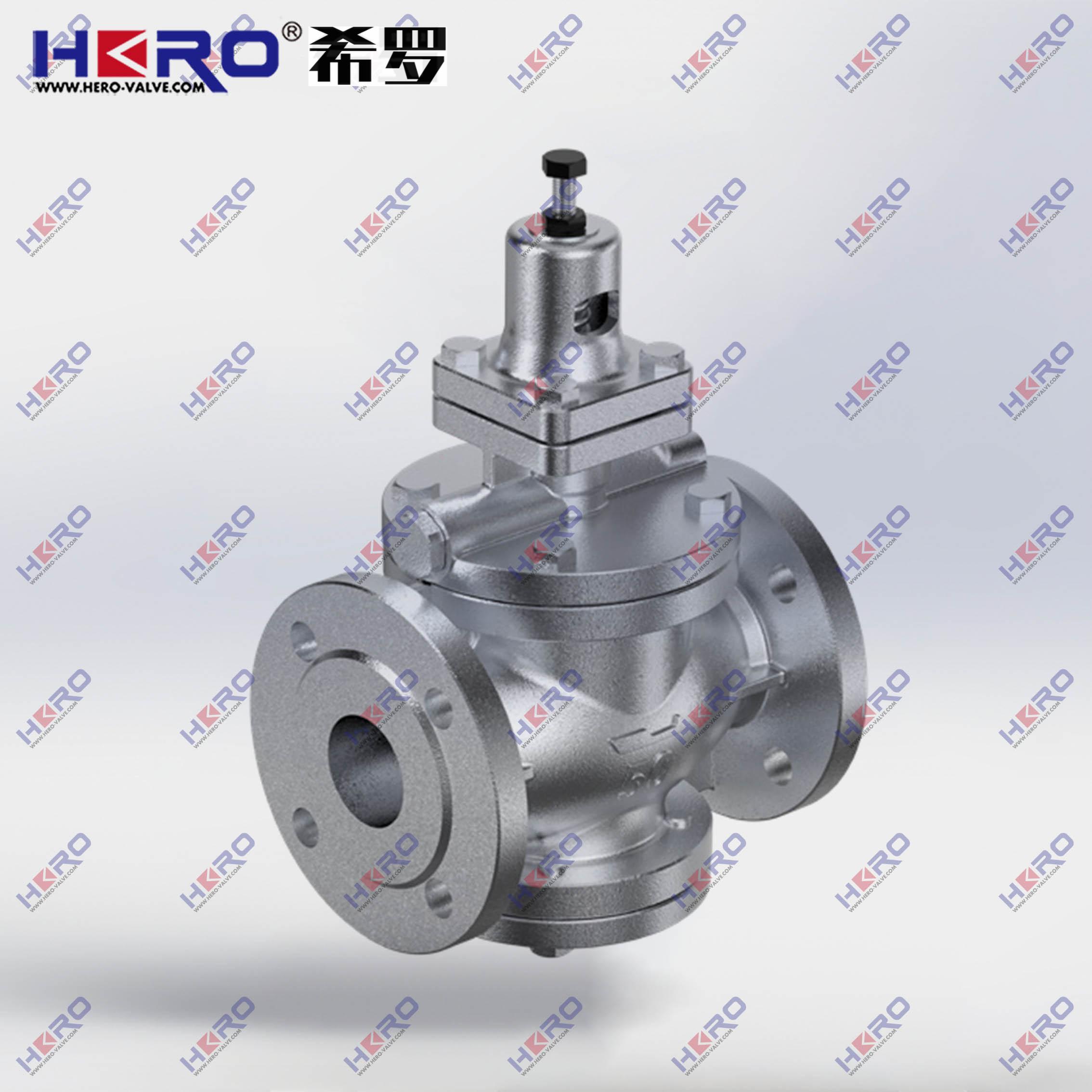
GP1000 Piston PRV.

Brand: HERO
Model: GP1000
Specification: DN15-DN100
Color: Silver/Blue/Black
Material: GGG40/WCB/CF8/CF8M
Design standard: DIN standard, ANSI standard, GB standard
Pressure range: 1.6Mpa-4.0Mpa
Working temperature: -40℃~+600℃
Operating condition: Steam medium
Description


Structural Features


  • Piston - type Structure: The GP1000 pressure - reducing valve typically uses a piston as the main pressure - controlling element. The piston can move up and down flexibly inside the valve body. By changing the position of the piston, the opening of the valve is controlled, thereby achieving pressure regulation. This structure endows the valve with good stability and reliability, enabling it to withstand high pressures and large flow rates.

  • Spring - loaded: It is equipped with a spring device. The elastic force of the spring is used to set and adjust the outlet pressure of the pressure - reducing valve. By adjusting the degree of spring compression, the force exerted by the spring on the piston can be changed, thus setting different outlet pressure values. The spring - loaded method can provide a stable pressure - regulating force, ensuring that the pressure - reducing valve can accurately control the pressure under different working conditions.

  • Valve Seat and Valve Core: It has a valve seat and a valve core that are processed with high precision. The close fit between them can ensure good sealing performance when the valve is closed, effectively preventing medium leakage. During the pressure - regulating process, the valve core accurately controls the opening of the valve port according to the movement of the piston, achieving precise regulation of flow rate and pressure.


Working Principle


  • Pressure Input: The medium enters the pressure - reducing valve from the inlet end, and the inlet pressure acts on one side of the piston.

  • Piston Movement: When the inlet pressure is higher than the set outlet pressure, the piston moves upward under the action of the pressure difference. The movement of the piston drives the valve core upward, increasing the opening of the valve port, allowing more medium to flow through the valve to the outlet end, thereby reducing the outlet pressure.

  • Pressure Balance: As the medium flows towards the outlet, the outlet pressure gradually rises. When the outlet pressure reaches the set value, the pressure difference on both sides of the piston and the spring force reach an equilibrium state. The piston stops moving, and the opening of the valve port remains stable. At this time, the outlet pressure is maintained within the set range. If the outlet pressure fluctuates due to changes in downstream working conditions, the piston will move up or down accordingly, driving the valve core to adjust the opening of the valve port, keeping the outlet pressure stable at all times.


Performance Parameters


  • Nominal Pressure: Generally, there are various specifications available. Common ones include 1.6MPa, 2.5MPa, 4.0MPa, etc., which can meet the requirements of different industrial occasions for pressure levels.

  • Nominal Diameter: The range usually extends from DN15 to DN100 or even larger. Different diameter sizes can adapt to different flow requirements and can be widely applied to pipeline systems of various diameters.

  • Pressure Adjustment Range: The outlet pressure can be precisely adjusted within a certain range, such as from 0.1MPa to 1.0MPa, etc. The specific adjustment range may vary depending on different models and specifications, meeting the specific requirements of different users for the outlet pressure.

  • Applicable Temperature: It is generally suitable for media within a certain temperature range, usually around - 20°C to 200°C. However, the specific temperature range may also vary depending on the material and design of the valve, and it can be applied to various fluid media with different temperatures.


Material Selection


  • Valve Body Material: Commonly used materials include cast iron, cast steel, or stainless steel. Cast iron has a relatively low cost, certain strength, and corrosion resistance, making it suitable for some ordinary working conditions where the requirements for the medium are not high and the pressure and temperature are relatively low. Cast steel has high strength and can withstand high pressures and temperature changes, being suitable for most industrial occasions. Stainless steel has excellent corrosion resistance and hygienic properties and is often used in occasions with high requirements for medium purity and corrosion resistance, such as the food, pharmaceutical, and chemical industries.

  • Piston and Valve Core Material: Generally, materials such as stainless steel, copper alloy, or high - strength alloy are used. These materials have good corrosion resistance, wear resistance, and fatigue resistance, ensuring the stable performance of the piston and valve core during long - term use and the reliable operation of the pressure - reducing valve.


Application Fields


  • Industrial Field: In industrial production such as the chemical, petroleum, natural gas, and power industries, it is widely used for the pressure regulation of various gas, steam, or liquid media. For example, in the chemical production process, it is used to regulate the pressure of reaction kettles, pipelines, etc., ensuring the stable pressure during the production process, and safeguarding the safe operation of equipment and the normal progress of the process. In the oil and natural gas transportation pipelines, it is used to control the pressure inside the pipeline, preventing excessive or insufficient pressure from damaging the pipeline and equipment.

  • Construction Field: It plays an important role in the building's water supply and drainage system, heating system, and fire - fighting system. In the water supply and drainage system, it can be used to adjust the water supply pressure to ensure the stable water pressure on each floor. In the heating system, it is used to adjust the pressure of hot water or steam, making the system pressure meet the user's needs and improving the comfort and stability of the system. In the fire - fighting system, it can ensure that the fire - fighting water is supplied at an appropriate pressure, ensuring the normal use of fire - fighting equipment.

  • Other Fields: In some laboratories, scientific research equipment, and various instrument and meter systems with high requirements for pressure control, the GP1000 pressure - reducing valve is also widely used to provide a stable pressure source for these devices, ensuring the accuracy and reliability of experiments and equipment operation.


Installation and Maintenance


  • Installation Requirements: It should be installed on a horizontal pipeline and as close as possible to the equipment or device that needs pressure reduction. When installing, the flow direction of the medium must be determined strictly according to the arrow marked on the valve body to ensure the correct flow direction of the medium. At the same time, a certain length of straight pipe section should be reserved before and after the valve. Generally, the length of the straight pipe section before the valve should be no less than 5 times the pipe diameter, and the length of the straight pipe section after the valve should be no less than 3 times the pipe diameter to ensure the stable flow of the fluid and reduce the impact on the pressure - regulating performance of the pressure - reducing valve. In addition, a filter needs to be installed before the valve to prevent impurities, particles, etc. in the pipeline from entering the valve and damaging components such as the piston and valve core, affecting the normal operation of the valve.


Common Faults


The GP - 1000 pilot - piston - type steam pressure - reducing valve is widely welcomed for its strong adaptability to high - frequency action occasions, large - flow, and high - pressure - difference working conditions. However, in practical applications, due to improper application, component fatigue, and other reasons, faults such as valve direct - through and inaccurate pressure regulation may occur. The common causes of these faults and corresponding measures are introduced as follows:


  1. The GP - 1000 pressure - reducing valve shows a direct - through phenomenon: The pressure before and after the pressure - reducing valve is the same or the pressure difference is minimal. The possible causes of this fault are:

    • The spring of the pilot - valve disc fails; the stem or push - rod of the pilot - valve disc is stuck, keeping the main - valve piston in an open state; the main - valve piston is stuck at the highest position of the piston sleeve. For the above situations, we need to inspect and clean the GP - 1000 and ensure correct assembly.

    • The sealing surfaces of the main valve or pilot valve of the GP - 1000 are damaged or have foreign matter trapped; the pilot - tube behind the valve is blocked, preventing the pressure - reducing valve from closing; the diaphragm in the pilot valve is damaged or there is leakage at its peripheral sealing. For the above phenomena, in addition to regularly inspecting and cleaning the pressure - reducing valve, we also need to install a filter and a drain pipe before the valve, and regularly inspect and clean the filter and drain pipe. When inspecting the pressure - reducing valve, pay attention to observe whether the sealing surface is damaged. If damage is found, repair it in time.


  2. The GP - 1000 pressure - reducing valve shows an unstable pressure - regulation phenomenon: The outlet pressure of the GP - 1000 pressure - reducing valve does not match the preset pressure or fluctuates significantly and frequently. The reasons for this fault phenomenon are: the springs of the pilot valve or main valve are fatigued; the main - valve piston has poor sealing; the stiffness of the adjusting spring is too large, causing unstable outlet pressure; the diaphragm in the pilot valve is fatigued and even loses its regulating function; the moving parts inside the valve are worn, hindering the normal opening and closing process of the valve. After the unstable pressure - regulation phenomenon occurs, first activate the bypass pipe, cut off the valves before and after the pressure - reducing valve, and after the pipeline to which the pressure - reducing valve belongs is depressurized, repair or replace the pressure - reducing valve. When selecting a pressure - reducing valve, choose an appropriate adjusting spring according to the pressure before and after the valve.


Precautions


  • The pressure - reducing valve must be fixed during transportation. Due to its low center of gravity, inversion is not allowed. When unpacking, do not grab the stainless - steel pipe, but hold the valve body firmly. When moving the pressure - reducing valve, pay attention to avoid the eccentric movement of the adjusting spring of the pressure - reducing valve.

  • The pressure - reducing valve should be installed correctly to meet the requirements of the (Pilot Diaphragm - type Pressure - reducing and Pressure - stabilizing Valve Manual). The typical installation method should refer to the typical setting of the pressure - reducing station. The steam pipelines before and after the pressure - reducing valve should use clean seamless steel pipes, and all welded parts should effectively remove welding slag and other debris. To prevent flow blockage and ensure smooth flow before and after the pressure - reducing valve, the diameter of the pipeline downstream of the pressure - reducing valve should be increased. The reducer should use an eccentric reducing head to avoid water hammer and erosion caused by water accumulation.

  • A steam - specific filter must be installed upstream of the pressure - reducing valve, and the filter screen should use a 100 - mesh double - layer stainless - steel screen. The filter body should be installed laterally to facilitate the removal and cleaning of the filter screen and avoid water accumulation. For large - diameter filters, they can be installed downward, but a hole should be drilled in the plug to connect a steam trap for drainage. The steam trap should be followed by a union or flange connection that is easy to disassemble for convenient cleaning of the filter.

  • The pressure - reducing valve should be installed on a horizontal pipeline, and the steam flow direction should be consistent with the direction indicated by the arrow on the valve body of the pressure - reducing valve. The flow upstream of the pressure - reducing valve should be as smooth as possible. If external pressure - taking is used, the downstream pressure - taking point should be located at a point 10 times the pipe diameter away from the pressure - reducing valve and more than 0.3 meters away from the front and rear of the valve to avoid inaccurate pressure measurement caused by unstable flow. When the pressure - reducing valve is only used for a single device, the pressure - taking point can be the steam space of the device. A shut - off valve should be installed on the external pressure - taking conduit for easy maintenance, and the sensing tube should have a certain downward slope.

  • Pressure gauges should be installed before and after the pressure - reducing valve. The steam pressure gauge must be equipped with a buffer cooling tube for convenient debugging and pressure display.
    The pipelines connected to the steam pressure - reducing valve should have good support to avoid the pressure - reducing valve being stressed. The connection between the pressure - reducing valve and the pipeline uses a metal graphite wound gasket. All valves in the pressure - reducing station should be thermally tightened within 24 hours after steam - passing to prevent leakage and erosion at the joints.

  • If the diameter of the pipeline downstream of the pressure - reducing valve is expanded by more than 3 levels, a rectifying and noise - reducing device can be installed.

  • An inverted - bucket steam trap must be installed upstream of the pressure - reducing valve, and a water - collecting pipe should be provided in front of the steam trap. If the steam transportation distance is long, a steam - water separator is recommended. If there is a rising pipeline downstream of the pressure - reducing valve, an inverted - bucket steam trap should also be installed.

  • A bypass can be set for the pressure - reducing valve, and the diameter of the bypass valve should be the same as that of the pressure - reducing valve to facilitate the maintenance of the pressure - reducing valve without stopping the steam. At the same time, for convenient maintenance, bellows - sealed globe valves should be installed before and after the pressure - reducing valve. A safety valve should be installed downstream of the pressure - reducing valve. The set pressure of the safety valve should be more than 10% higher than the no - load pressure of the steam pressure - reducing valve to overcome the reseating pressure difference of the installed valve.

website qrcode

企業(yè)公眾號

 Work Time
Mon to Fri :8:00-22:00
Sat to Sun :9:00-20:00
 Contact Details
TEL::+86-577-6716 0060
E-Mail::INFO@HERO-VALVE.COM
饶平县| 商丘市| 兖州市| 周口市| 沂源县| 连山| 古蔺县| 泰宁县| 清苑县| 富民县| 泉州市| 龙陵县| 富裕县| 达州市| 沁源县| 翁源县| 屏东市| 南昌市| 富源县| 松原市| 灵山县| 奎屯市| 扎赉特旗| 常德市| 同仁县| 嘉荫县| 安陆市| 错那县| 朔州市| 冷水江市| 孟村| 屯留县| 句容市| 谷城县| 忻城县| 丘北县| 阿坝| 肇东市| 嘉善县| 济宁市| 开封县|