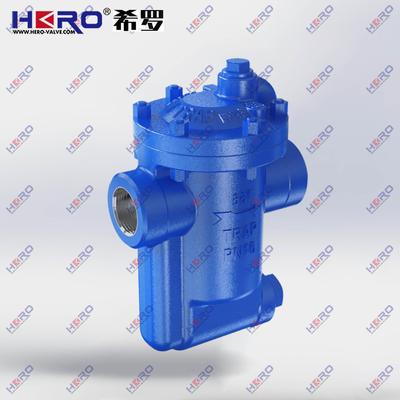
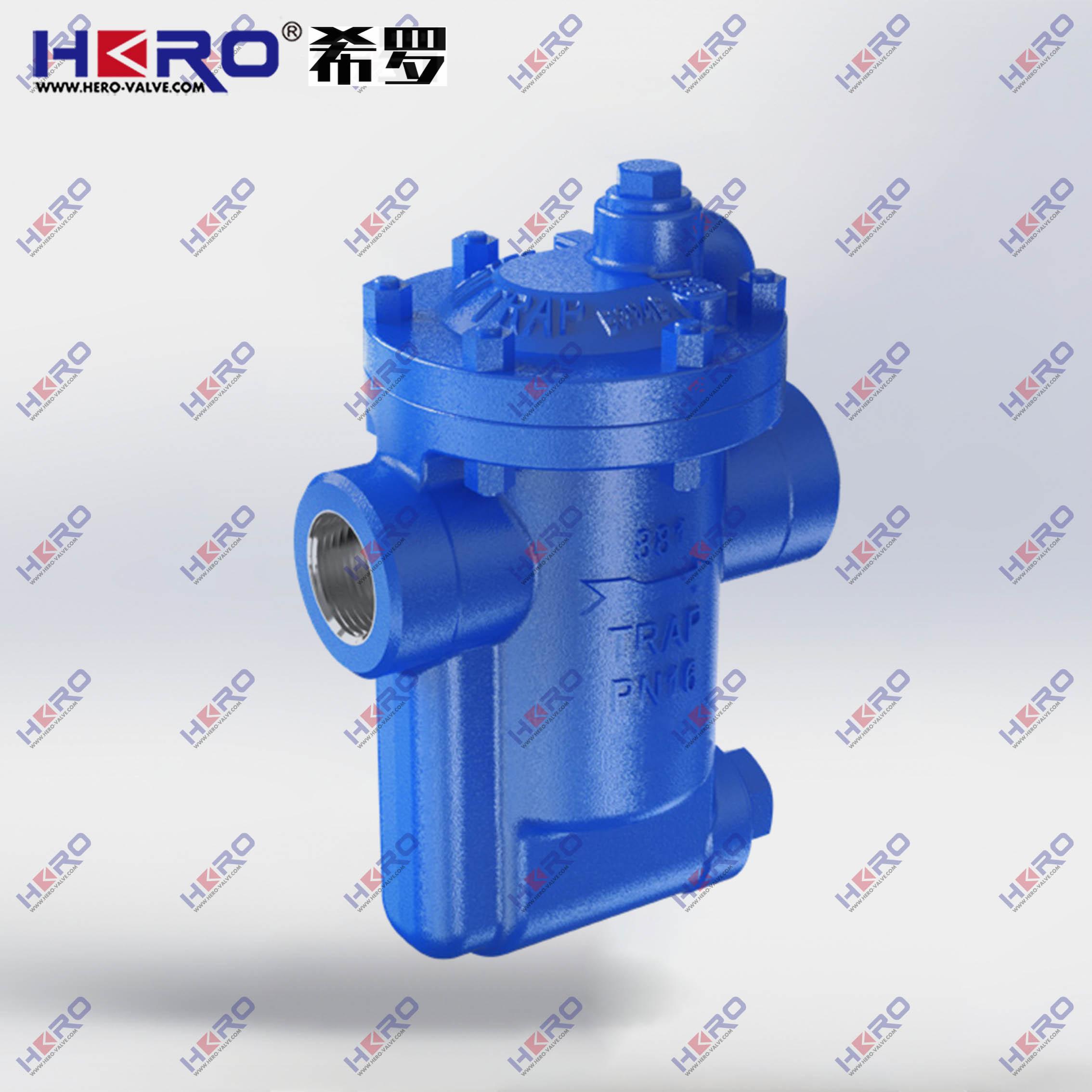
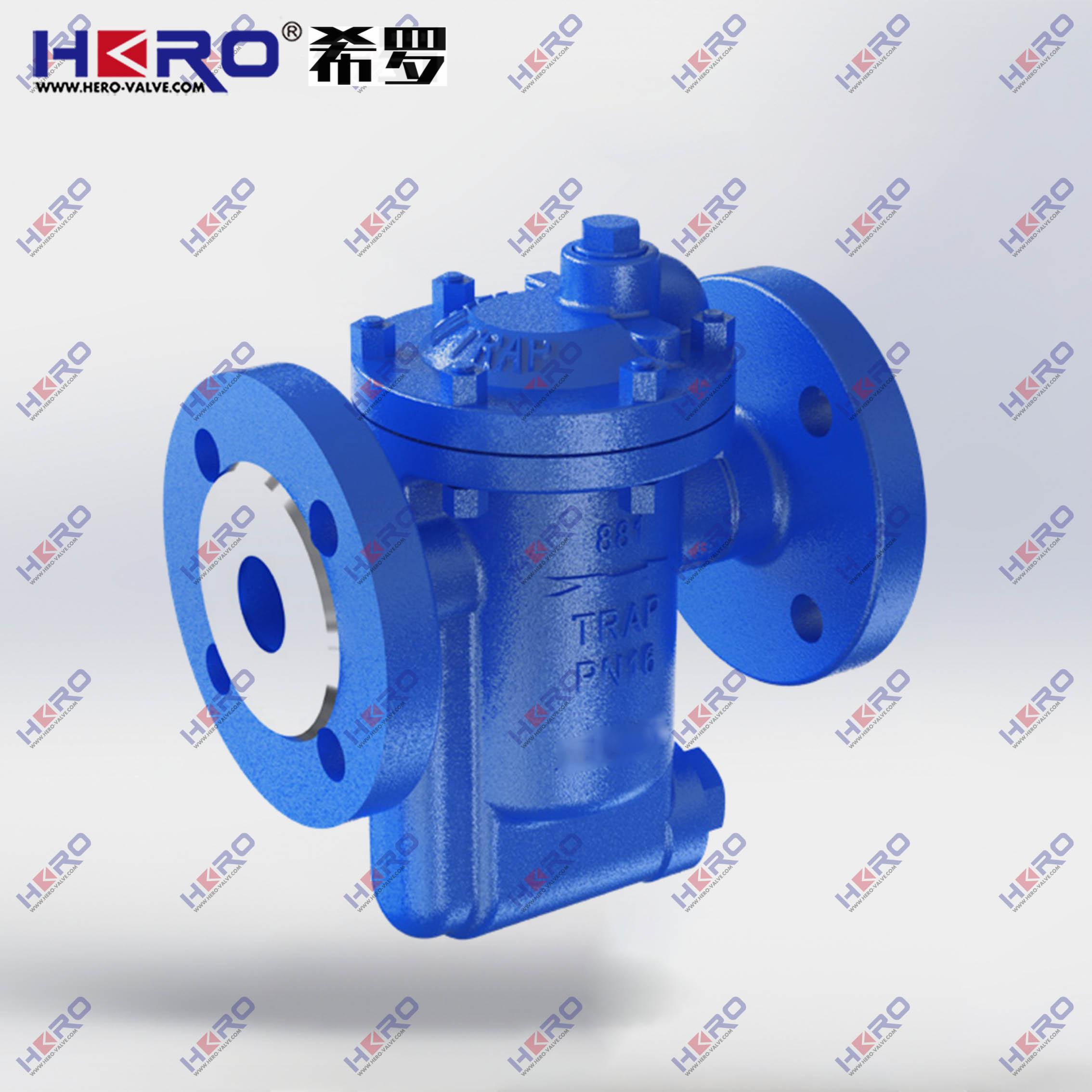
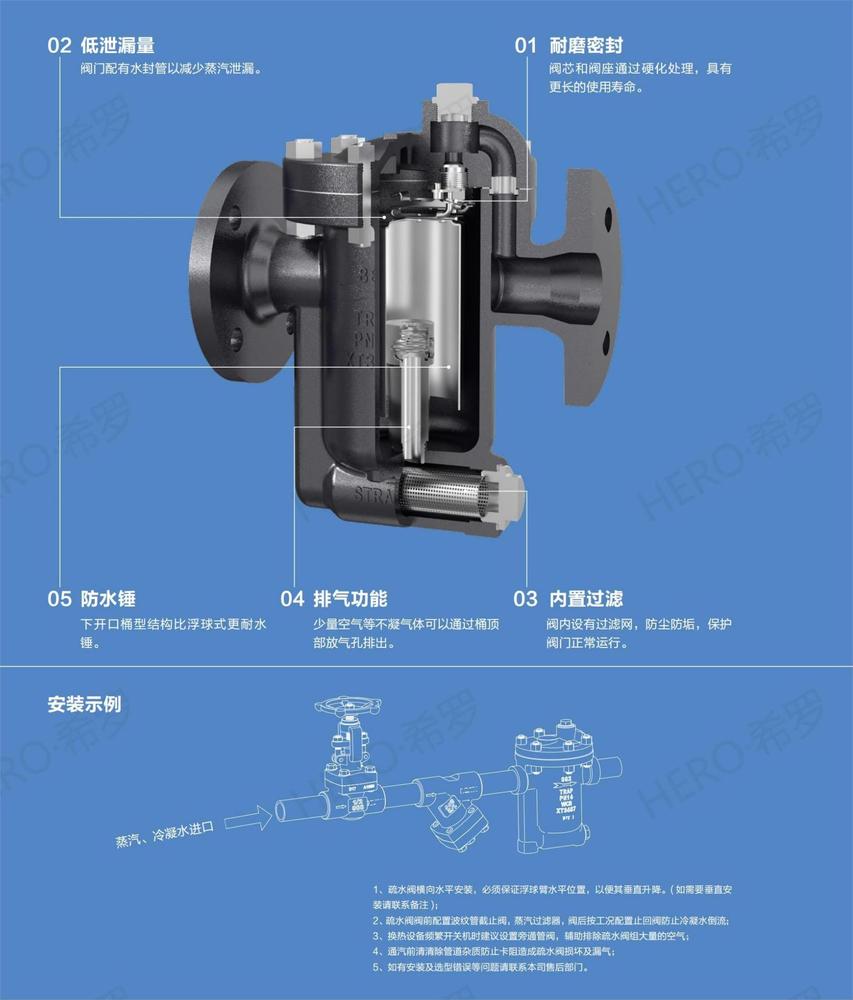
The inverted bucket steam trap is a common type of steam trap. The following is a detailed introduction to it:
Working Principle
Buoyancy Principle: Inverted bucket steam traps mainly rely on the buoyancy generated by the density difference between condensate water and steam to work. When the device starts up, there is a lot of air and low-temperature condensate water in the pipeline. At this time, the inverted bucket is in a sinking state due to gravity. The lever system connected to the inverted bucket will drive the valve disc to open, allowing air and condensate water to be discharged smoothly.
Steam Inlet and Closing: When steam enters the steam trap, since the density of steam is less than that of condensate water, it will gather above the inverted bucket. As the steam continues to enter, the inverted bucket is gradually surrounded by steam and generates upward buoyancy. When the buoyancy reaches a certain level, the inverted bucket rises and drives the valve disc to close through the lever action, preventing the steam from being discharged.
Condensate Water Accumulation and Reopening: As the steam continues to condense, the condensate water in the inverted bucket gradually increases. When the weight of the condensate water exceeds the buoyancy generated by the steam, the inverted bucket will sink again and the valve disc will open again to discharge the condensate water. This cycle is repeated to achieve the function of automatically discharging condensate water and preventing steam leakage.
Structural Features
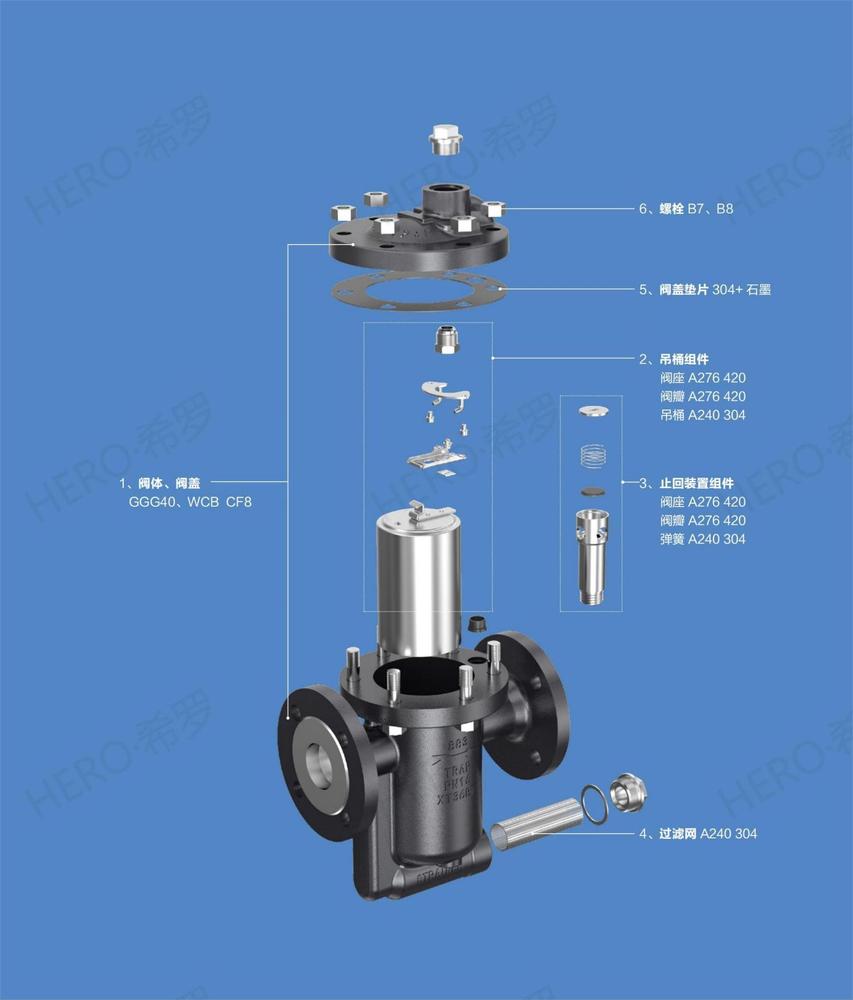
Inverted Bucket Design: This is its most prominent structural feature. The bucket is installed upside down inside the steam trap. This design enables the inverted bucket to move up and down stably according to the conditions of condensate water and steam during the operation of the steam trap, ensuring the normal operation of the steam trap.
Lever Transmission Mechanism: The inverted bucket and the valve disc are connected by a lever, which converts the up and down movement of the inverted bucket into the opening and closing action of the valve disc. The lever mechanism can effectively transmit force and can adjust the magnitude and direction of the force as needed to ensure that the valve disc can accurately control the discharge of condensate water.
Water Seal Structure: There is usually a water seal structure inside the steam trap. The condensate water is used to form a water seal to prevent steam from directly leaking from the drain outlet. The water seal structure can improve the sealing performance of the steam trap, reduce steam loss and improve energy efficiency.
Filter Screen: Generally, a filter screen is installed at the inlet of the steam trap to filter impurities, particles, etc. in the steam and condensate water, preventing these impurities from entering the inside of the steam trap and affecting the normal movement and sealing performance of components such as the inverted bucket and valve disc, thus prolonging the service life of the steam trap.
Product Advantages
Good Drainage Performance: It can discharge the saturated condensate water in the pipeline in a timely and effective manner, preventing the condensate water from accumulating in the pipeline, affecting the normal operation of the steam system and ensuring the thermal efficiency of the heating equipment.
Strong Water Hammer Resistance: Due to the structural characteristics of the inverted bucket, it can withstand a certain degree of water hammer phenomenon, that is, the pressure fluctuation in the pipeline caused by the sudden flow of condensate water or the impact of steam. It is not easy to be damaged by water hammer and has high working reliability.
Wear and Corrosion Resistance: The main components of the inverted bucket steam trap are usually made of corrosion-resistant and wear-resistant materials, such as stainless steel and copper, which can operate stably for a long time in harsh working environments, reducing maintenance and replacement costs.
Significant Energy Saving Effect: By accurately controlling the discharge of condensate water and effectively preventing steam leakage, it can greatly reduce steam waste, improve the energy utilization rate of the steam system and achieve energy saving effect.
Long Service Life: The reasonable structural design and the selection of high-quality materials enable the inverted bucket steam trap to have a long service life under normal working conditions, generally up to 5 years or even longer, reducing the maintenance and renewal frequency of the equipment.
Application Range
Industrial Field: It is widely used in the condensate water discharge systems of steam heating equipment, steam pipelines, heat exchangers, evaporators and other equipment in the petrochemical, electric power, steel, textile, printing and dyeing, papermaking and other industries to ensure the efficient operation of these equipment.
Construction Field: In the heating system, air conditioning system, hot water supply system, etc. of buildings, it is used to discharge the condensate water in the steam pipeline and heat dissipation equipment, ensuring the stability and comfort of the indoor temperature and improving the heating and cooling effect.
Other Fields: It can also be applied to the steam systems of the food processing, pharmaceutical, rubber and other industries to meet the requirements of these industries for steam quality and condensate water discharge and ensure the smooth progress of the production process.
Common Problems and Solutions
Steam Leakage: It may be caused by wear of the valve disc, damage to the sealing surface or leakage of the inverted bucket. The solution is to check the condition of the valve disc and the sealing surface. If there is wear or damage, replace them in time. Check whether the inverted bucket is leaking. If there is leakage, replace the inverted bucket.
No Drainage or Poor Drainage: It may be caused by a clogged filter screen, the inverted bucket being stuck or a valve disc malfunction. It is necessary to clean the filter screen and check whether the inverted bucket and the valve disc are normal. If there is jamming or malfunction, repair or replace them.
Frequent Operation: It may be caused by unstable system pressure, improper selection of steam traps or air in the inverted bucket. It is necessary to stabilize the system pressure, check whether the selection of steam traps is appropriate, and discharge the air in the inverted bucket.