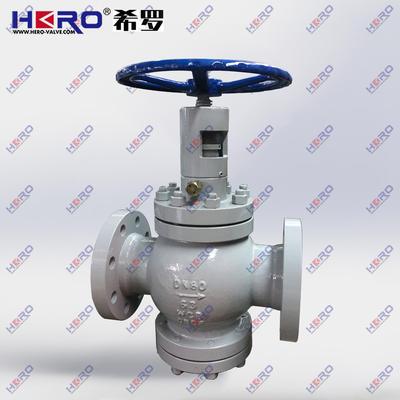
Performance Specifications
Nominal pressure (MPa) 1.6~16.0 Applicable temperature (℃) -29~250 Applicable medium Oil, natural gas, water, etc.
Product structure characteristics
1. This valve is a new type of throttling, shut-off and venting product. The valve adopts cage-shaped throttling and has multi-stage throttling effect. It has obvious throttling effect, reliable sealing, and convenient operation and maintenance.
2. The valve adopts double seal (hard and soft seal) to make the seal reliable, the carbide cover can be more resistant to air flow erosion and wear, and the double seal can achieve zero leakage under high-pressure gas medium conditions. The valve has a long service life.
3. The sealing surface of the valve seat adopts a tapered seal, which is conducive to the valve itself cleaning the dirt attached to the sealing surface.
4. The valve disc is provided with a balancing hole and a piston seal to ensure stable operation under full pressure difference conditions for opening/closing. The valve is easy and flexible to open and the opening and closing torque is small.
5. The throttling, shut-off and vent valves and double-acting throttling valves have both throttling and shut-off (zero leakage in the seal) functions. The throttling part is separated from the sealing surface to reduce the erosion of the seal by the airflow.
6. The double-acting throttling stop valve also has a multi-stage throttling function, a large throttling pressure difference, and can be used for throttling and shutting under high pressure.
7. The packing adopts a V-shaped packing structure with self-sealing ability, which does not require adjustment and is extremely easy to open and close. The stuffing box is equipped with an auxiliary sealing grease injection structure to ensure reliable sealing performance of the valve packing.
8. This valve can be repaired online, and the packing and other wearing parts can be replaced under pressure in the pipeline.
9. This valve is equipped with a larger drain hole at the bottom of the valve. If necessary, it should be opened to clean the dirt inside the valve.
1. Normally closed state: The hard seal of the valve disc is pressed against the valve seat boss to form a hard seal. At the same time, the soft seal embedded in the valve disc is pressed against the end face of the valve seat to form a second seal. The double-mass seal structure ensures zero leakage of the valve. Since the valve disc has a balancing hole, the valve disc is subjected to a smaller force when the valve is closed or opened, and the valve has a smaller torque when it is opened or closed.
2. Pressure relief state: When the bottom end of the valve disc leaves the valve seat sealing surface, the valve disc and the inner diameter of the cage sleeve form a seal because the bottom end surface of the valve disc is close to the bottom edge of the cage sleeve slot. There is no direct venting and pressure relief, thus achieving a relief effect.
3. Throttling state: the bottom of the valve disc leaves the valve seat and opens further, forming a first-level throttling at the small throttling head. The high-speed fluid flows directly to the small valve disc after pressure-relief throttling. Since the edge of the valve sleeve window is the final throttling surface, when the high-pressure medium directly flushes the throttling channel, the bottom of the valve disc generates eddy currents due to the change in medium direction, which slows down the direct flushing of the valve disc by the medium, so that the valve seat seal also avoids the direct flushing of the medium. At the same time, since the valve disc sealing surface is conical, it can blow away the dirt and impurities on the valve seat sealing surface to protect the sealing surface, thereby extending the service life of the valve.
4. Fully open state: When the valve disc is in the fully open state, the entire valve is in a fully vented state. The resistance of the fluid in the cold door is small, which shortens the venting time and improves the venting effect of the valve.