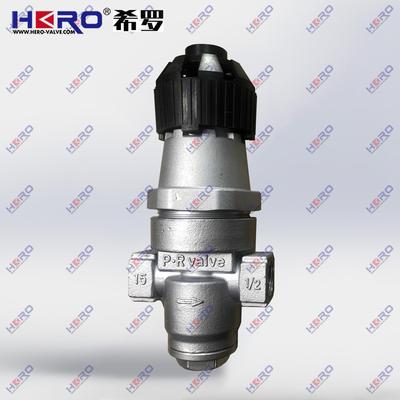
The Y14H pressure - reducing valve is a common type of valve used to control fluid pressure.
Structural Features
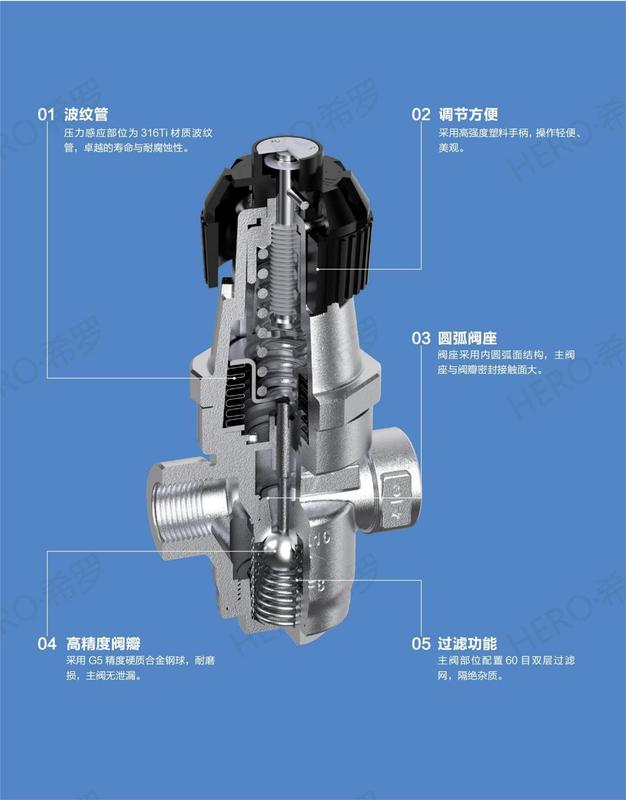
Bellows Structure: The Y14H pressure - reducing valve employs a bellows as its sensitive component. The bellows features excellent elasticity and sealing properties. It can effectively isolate the inner cavity of the valve body from the external environment, preventing medium leakage. Moreover, it can accurately sense pressure variations, converting the pressure signal into the expansion and contraction of the bellows, thereby controlling the valve's opening.
Single - seat Design: It typically adopts a single - seat valve core structure. This design endows the valve with good sealing performance when closed, effectively blocking the fluid and reducing the leakage volume. Additionally, the single - seat structure is relatively sensitive during pressure adjustment, enabling more precise control of the outlet pressure.
Working Principle
Pressure Sensing: When the medium enters the pressure - reducing valve from the inlet end, the inlet pressure acts upon the bellows. If the inlet pressure exceeds the set outlet pressure value, the bellows will be stretched under pressure.
Valve Core Adjustment: The elongation of the bellows drives the valve core to move downward, increasing the opening of the valve port. Consequently, more medium can flow through the valve to the outlet end, achieving the goal of pressure reduction. As the medium flows towards the outlet, the outlet pressure gradually rises.
Pressure Balance: When the outlet pressure reaches the set value, the force acting on the bellows reaches an equilibrium with the spring force, etc. At this point, the valve core halts its movement, and the valve port opening remains stable, maintaining the outlet pressure within the set range. If the outlet pressure fluctuates due to changes in downstream working conditions, the bellows will expand or contract accordingly, driving the valve core to adjust the valve port opening and ensuring the outlet pressure remains stable at all times.
Performance Parameters
Nominal Pressure: Generally, there are multiple specifications available. Common ones include 1.6 MPa, 2.5 MPa, 4.0 MPa, etc., which can be selected according to different application scenarios and pressure requirements.
Nominal Diameter: The range usually spans from DN15 to DN50, etc. Different diameter sizes can accommodate different flow requirements, meeting the needs of various pipeline systems.
Pressure Adjustment Range: The outlet pressure can be precisely adjusted within a certain range. For example, it can range from 0.05 MPa to 1.0 MPa, etc. The specific adjustment range may vary depending on different models and specifications.
Applicable Temperature: It is generally suitable for media within a certain temperature range, typically around - 20°C to 200°C. However, the specific temperature range may also vary depending on the valve's material and design.
Material Selection
Valve Body Material: Commonly used materials include cast iron, cast steel, or stainless steel. Cast iron, with its relatively low cost, has a certain degree of strength and corrosion resistance, making it suitable for some ordinary working conditions where the requirements for the medium are not stringent. Cast steel, boasting high strength, can withstand high pressures and temperatures, making it suitable for most industrial applications. Stainless steel, on the other hand, has excellent corrosion resistance and hygienic properties, and is often used in scenarios where high requirements for medium purity and corrosion resistance are demanded, such as the food and pharmaceutical industries.
Valve Core and Bellows Material: The valve core and bellows are generally made of materials such as stainless steel or copper alloy. Stainless steel offers good corrosion resistance and wear resistance, ensuring the stable performance of the valve core and bellows during long - term use. Copper alloy, with its good elasticity and corrosion resistance, is particularly suitable for some scenarios with special requirements for the medium.
Application Fields
Industrial Field: In industrial production processes such as those in the chemical, petroleum, and power industries, it is utilized for the pressure regulation of various gas, steam, or liquid media, ensuring stable pressure during production, safeguarding the safe operation of equipment, and facilitating the normal progress of the production process.
Construction Field: In building water supply and drainage systems as well as heating systems, it can be used to adjust the pressure of water or steam, enabling the system pressure to meet users' demands and enhancing the stability and comfort of the system.
Instrument and Meter Field: As a supporting device, it provides a stable pressure source for some instruments and meters with high pressure requirements, ensuring their measurement accuracy and normal operation.
Installation and Maintenance
Installation Requirements: It should be installed on a horizontal pipeline, as close as possible to the equipment or device that requires pressure reduction. During installation, ensure that the medium flow direction is consistent with the arrow direction on the valve body. Meanwhile, a certain length of straight pipe section should be reserved both before and after the valve to ensure stable fluid flow. Additionally, a filter needs to be installed before the valve to prevent impurities from entering the valve and affecting its normal operation.
Maintenance Points: Regularly inspect the valve's sealing performance to check for any leakage. Examine whether the bellows are damaged or deformed, and replace them promptly if any issues are detected. Clean the impurities and dirt inside the valve to ensure the cleanliness of the valve core and valve seat, thus guaranteeing the normal adjustment function of the valve. Regularly calibrate and adjust the pressure - regulating performance of the pressure - reducing valve to ensure that its outlet pressure remains within the set range.