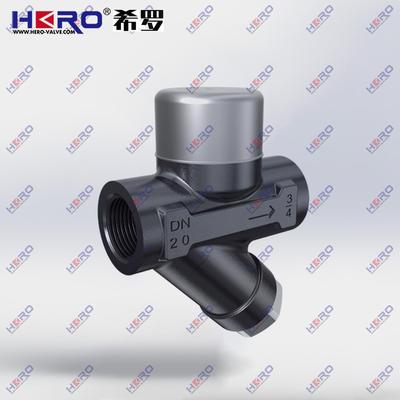
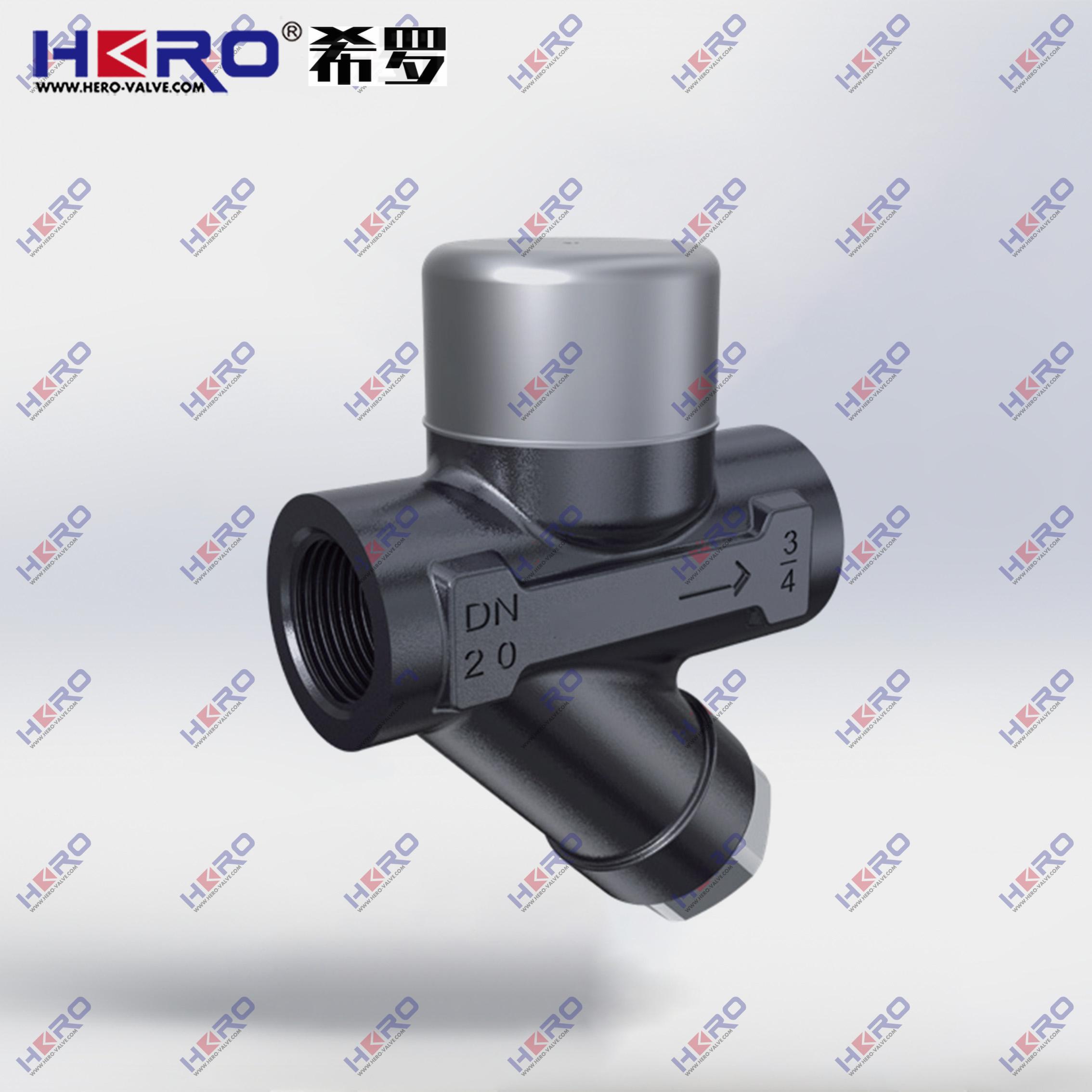
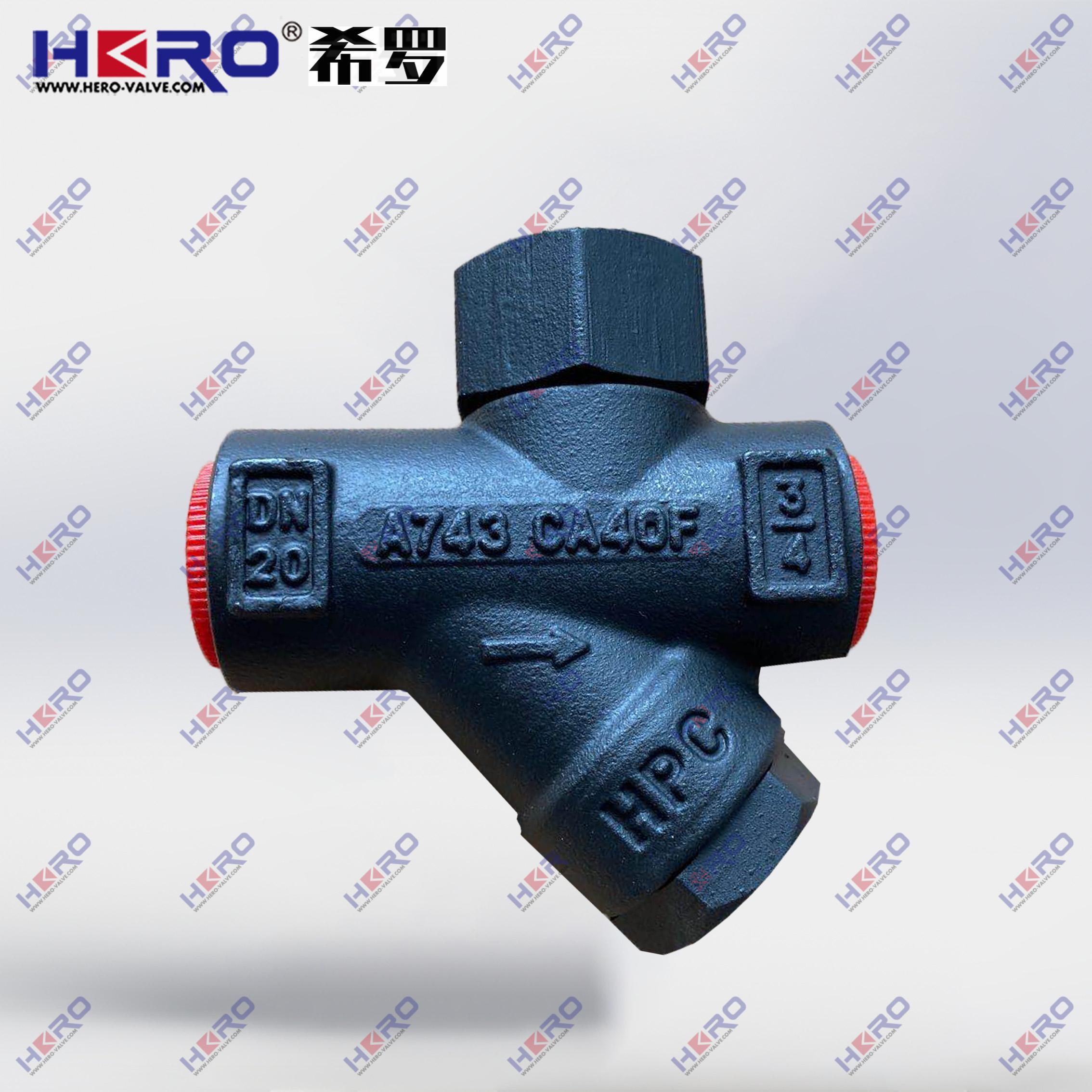
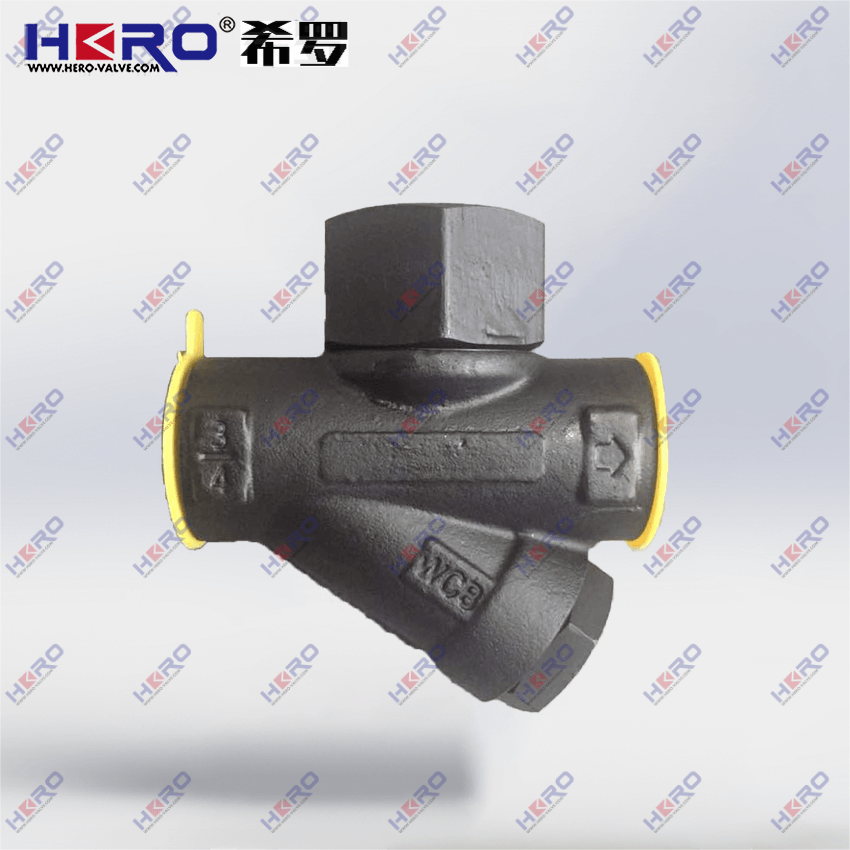
Basic Principle Thermodynamic steam traps operate based on the differences in thermodynamics properties between steam and condensed water. When the equipment starts up, there is a large amount of air and low-temperature condensed water in the pipeline. At this time, the disc of the steam trap is in an open state, allowing the air and condensed water to be discharged smoothly. As steam enters, the temperature and pressure rise, and the kinetic energy of the steam causes the disc to close, preventing steam leakage. When the condensed water accumulates again, the pressure and temperature change, and the disc will open again to discharge the condensed water, repeating this cycle of operation.
Specific Process In the initial stage, condensed water and air enter the steam trap. Due to their relatively high density, they occupy a certain space inside the steam trap and generate pressure, pushing the disc open for discharge. When steam enters, the high-speed flow of steam creates a low-pressure area above the disc. At the same time, the thermal energy of the steam causes the air around the disc to expand, increasing the pressure below the disc, which makes the disc close rapidly. As the condensed water continues to accumulate, the pressure inside the steam trap gradually increases. When the pressure reaches a certain level, it will overcome the pressure above the disc, causing the disc to open again and discharge the condensed water.
Structural Features
Simple and Compact Typically, the structure is relatively simple, mainly consisting of components such as the valve body, valve cover, and disc. There is no complex mechanical transmission device. The overall volume is small and the weight is light, making it easy to install and maintain.
Sturdy and Durable It is made of wear-resistant and corrosion-resistant materials, such as cast iron and stainless steel, which can adapt to different working environments and has a long service life.
No Moving Parts (Some Types) Some thermodynamic steam traps have no moving mechanical parts, such as floats or levers, reducing the failures caused by component wear and jamming, and improving reliability.
Performance Advantages
Good Drainage Performance It can quickly and effectively discharge the condensed water in the pipeline, preventing problems such as pipeline corrosion and water hammer caused by the accumulation of condensed water, and ensuring the normal operation of the steam system.
Strong Resistance to Water Hammer It can withstand a certain degree of water hammer pressure, causing less impact on the pipeline system and protecting the safety of the pipeline and equipment.
Wide Working Range It can operate within a wide range of pressures and temperatures. Generally, it can adapt to various steam systems from low pressure to high pressure and from low temperature to high temperature.
Significant Energy-saving Effect By promptly discharging the condensed water and preventing steam leakage, it improves the utilization efficiency of steam, reduces energy waste, and has a good energy-saving effect.
Application Scenarios
Industrial Field It is widely used in steam heating equipment, heat exchangers, steam pipelines, etc., in industries such as petroleum, chemical, power, steel, and textile, to remove the condensed water from the equipment and pipelines and ensure the efficient operation of the steam system.
HVAC System In the heating and air conditioning systems of buildings, it is used to remove the condensed water from steam radiators, air conditioning units, and other equipment, improving the heating and cooling effects.
Food and Beverage Industry It is used in the steam heating equipment during food processing, such as cooking kettles and sterilization equipment, to ensure the normal operation of the equipment and the quality of food.
Pharmaceutical Industry In the steam systems of pharmaceutical equipment, such as reaction kettles and drying equipment, it plays a role in removing condensed water and ensuring the process requirements.
Installation and Maintenance
Installation Generally, it is required to be installed vertically with the drainage port of the steam trap facing downward to ensure that the condensed water can be discharged smoothly. At the same time, it should be installed at the low point of the equipment or pipeline that needs drainage, and cut-off valves should be installed before and after it for easy maintenance and replacement.
Maintenance Regularly check the working status of the steam trap, such as whether there is any leakage and whether the drainage is normal. Clean the impurities and dirt inside the steam trap to prevent blockage from affecting the drainage effect. For problems such as disc wear that may occur after long-term use, replace or repair them in a timely manner.