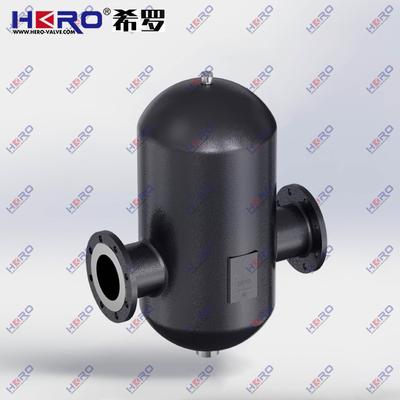
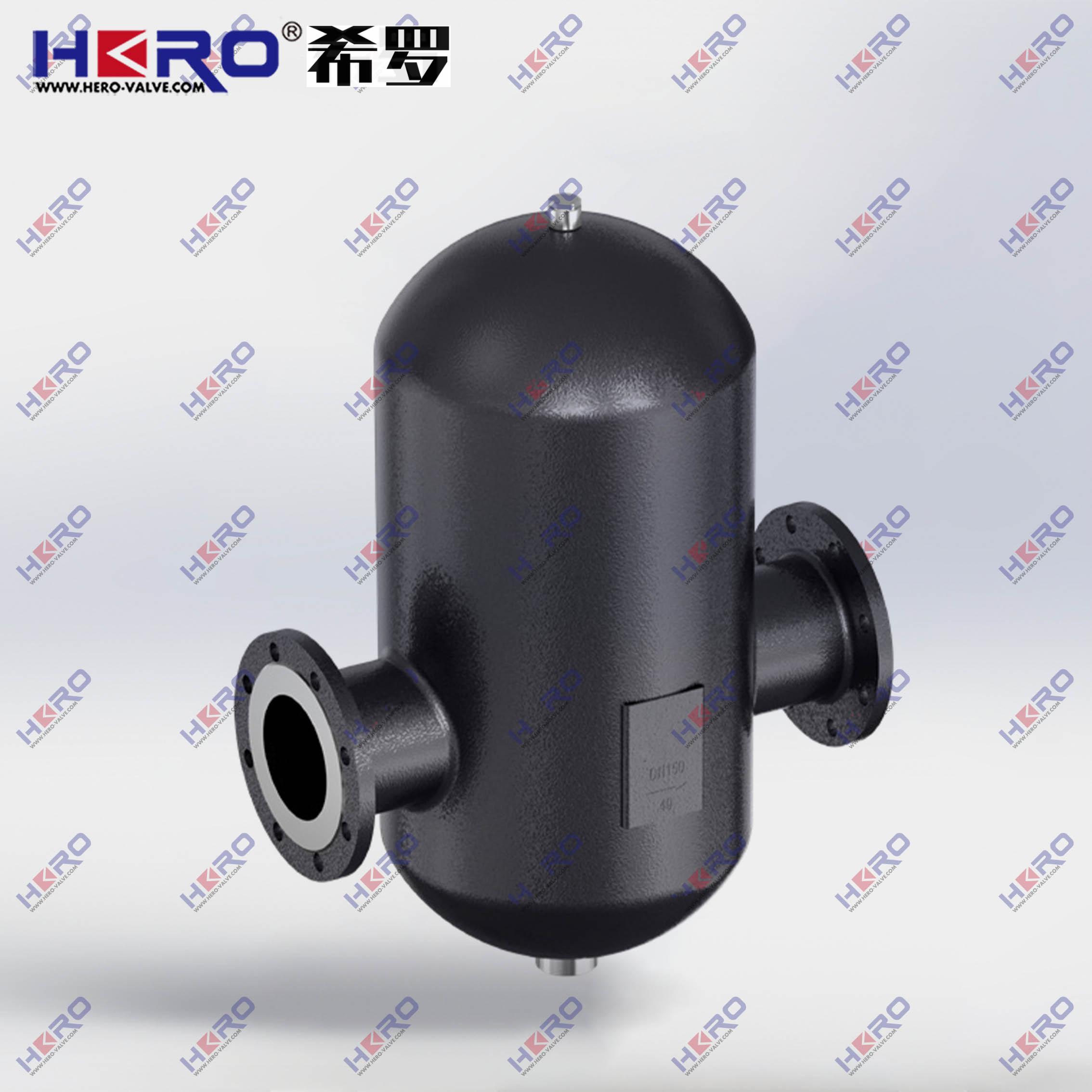
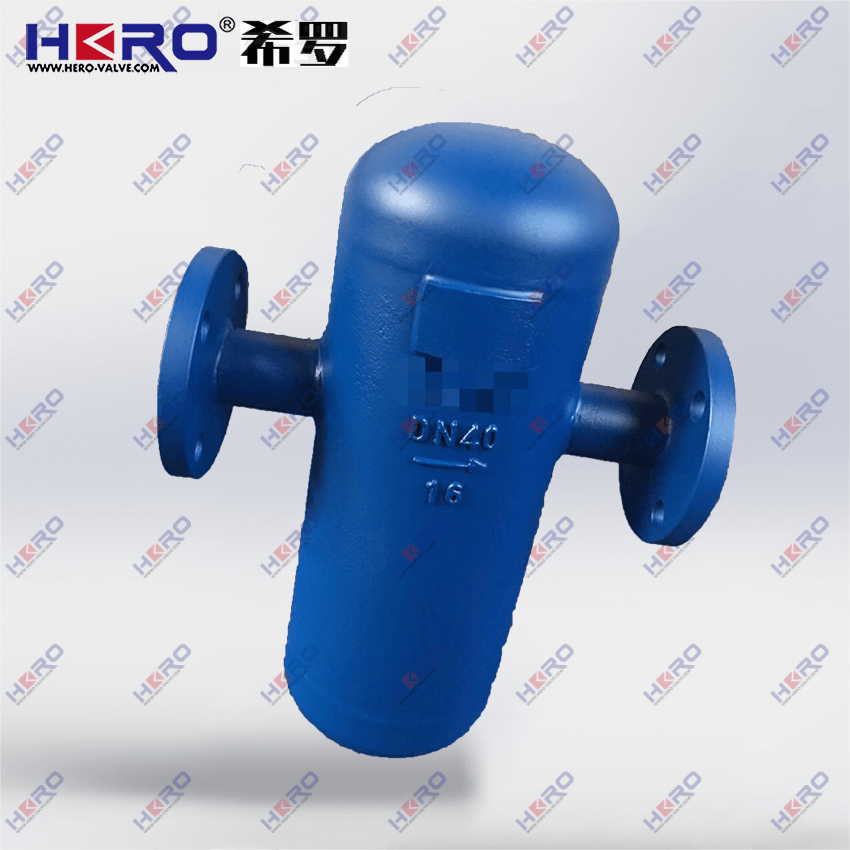
Centrifugal Separation When a large amount of steam, compressed air, or other gases containing water enter the AS steam and water separator, they move in a centrifugal and downward-inclined manner inside the separator. Due to the difference in density between gases and liquids, gases have a low density and small inertia, while liquids (such as water) have a high density and large inertia. Under the action of centrifugal force, the liquid is thrown to the edge and bottom of the separator, and the gas continues to flow towards the outlet of the separator, achieving a preliminary separation of gas and liquid.
Gravitational Settlement After the liquid is thrown to the edge and bottom of the separator by the centrifugal force, the liquid further settles downward under the action of gravity and accumulates at the bottom of the separator. The gas, under the action of gravity and the push of the subsequent gas flow, is discharged from the outlet of the separator, completing the further separation of gas and liquid.
Collision and Agglomeration During the movement of gas and liquid, the small liquid droplets in the gas may collide with the baffles, walls, and other parts inside the separator. After the small liquid droplets collide with each other, they will agglomerate into larger liquid droplets, which are more likely to settle to the bottom of the separator due to gravity, improving the separation effect.
Product Features
High-efficiency Separation It has a high separation efficiency, and generally, the dryness can reach 98%. It can effectively remove the liquid droplets in steam, compressed air, and other gases, ensuring that the output gas is dry and clean.
Low Pressure Drop The pressure loss is relatively small, with a pressure drop of approximately five thousandths. It has little impact on the pressure of the gas system and will not significantly increase the energy consumption of the system.
Robust Structure Designed in accordance with the pressure vessel specification, it mostly uses carbon steel or stainless steel materials, having good pressure resistance and corrosion resistance, and can adapt to different working environments and working conditions.
Air Exhaust Design For the situation where there is air in the steam, an air exhaust port is designed at the top of the separator, which can promptly discharge the accumulated air, ensuring the separation effect and the normal operation of the system.
Limiting Conditions
Suitable for Large Flow Rates The AS-type steam and water separator has a larger flow rate than the CF and UFS types. It is suitable for steam working conditions with large flow rates and can effectively separate the condensed water by utilizing the centrifugal force of air or steam.
Minimized Pressure Loss The structure of the liquid drainage separator is simple, which minimizes the pressure loss and can supply clean and dry steam or air to the equipment.
Strict Installation Requirements It must be installed on a horizontal pipeline with the drainage port vertically downward. All AS models of various diameters are equipped with installation brackets, which can reduce the pipeline load.
Requires Matching Steam Traps To ensure the rapid discharge of the separated liquid, a suitable set of steam trap combinations, such as float steam traps, should be connected to the drainage port at the bottom of the AS.
Application Scenarios
Industrial Production In the steam systems of industries such as petroleum, chemical, power, and steel, it is used to separate the water in the steam, improve the quality of the steam, ensure the normal operation of steam-driven equipment, heat exchangers, etc., and the heat transfer efficiency, and prevent equipment corrosion, water hammer phenomena, etc. caused by the presence of water.
HVAC Systems In the heating, ventilation, and air conditioning systems of buildings, it can be installed on steam pipelines, the steam supply pipelines of air conditioning units, etc., to separate the condensed water in the steam, improve the operating efficiency and comfort of the air conditioning system, and avoid damage to the pipelines and equipment caused by the condensed water.
Compressed Air Systems In the compressed air stations of factories, the gas supply pipelines of pneumatic equipment, and other occasions, it is used to separate the condensed water in the compressed air, protect pneumatic tools, pneumatic valves, and other equipment, prevent equipment failures and corrosion caused by water, and ensure the stable operation of the compressed air system.
Food, Beverage, and Pharmaceutical Industries In the steam heating equipment, sterilization equipment in food processing, and the steam supply systems of reaction kettles, drying equipment, etc. in the pharmaceutical industry, it can effectively separate the water in the steam, ensure product quality and the stability of the production process, and meet the hygiene and quality standards of relevant industries.
Installation and Maintenance
Installation Key Points
Vertical Installation All types of AS steam and water separators should be installed vertically to ensure that the drainage port is vertically downward, which is beneficial for the smooth discharge of the liquid under the action of gravity.
Unobstructed Outlet There should be no resistance at the outlet of the AS to avoid pressure buildup, ensuring the smooth discharge of gas. Otherwise, it may affect the separation effect and the operation of the system.
Pre-installation Testing Before installation, it should be specially tested, and its sealing performance should be checked to prevent leakage problems and ensure that the separator can work properly after installation.
Installation Location Install it on a horizontal pipeline with the drainage port vertically downward, and it should be installed at the low point of the gas pipeline to better collect and separate the liquid.
Maintenance Items
Regular Inspection Regularly inspect the in-use AS to check for problems such as leakage, component damage, and decreased separation effect, and handle the failures in a timely manner.
Cleaning and Maintenance Regularly clean the impurities, dirt, etc. inside the separator to prevent them from blocking the drainage port or affecting the separation effect.
Component Replacement Check the working status of steam traps and other components. If there is damage or performance degradation, replace them in a timely manner to ensure the normal operation of the separator.