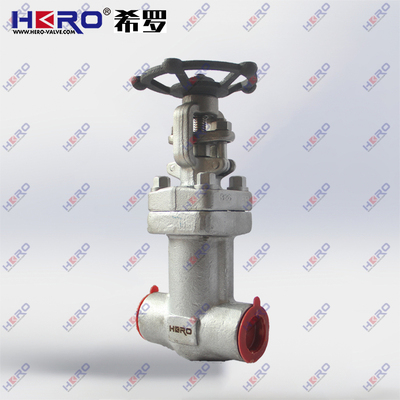
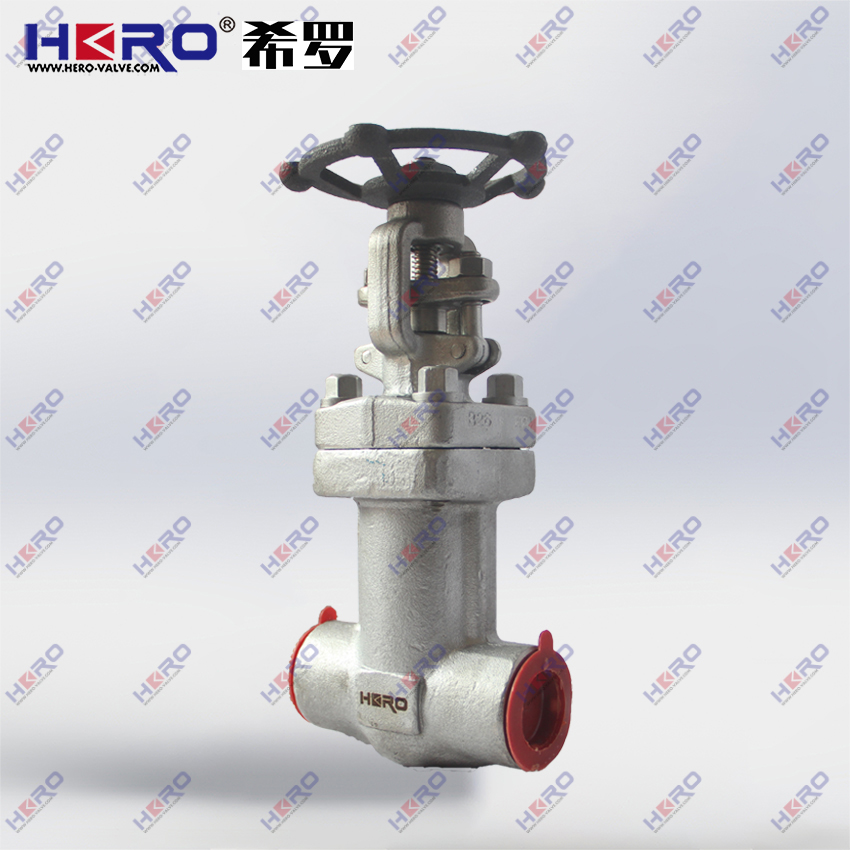
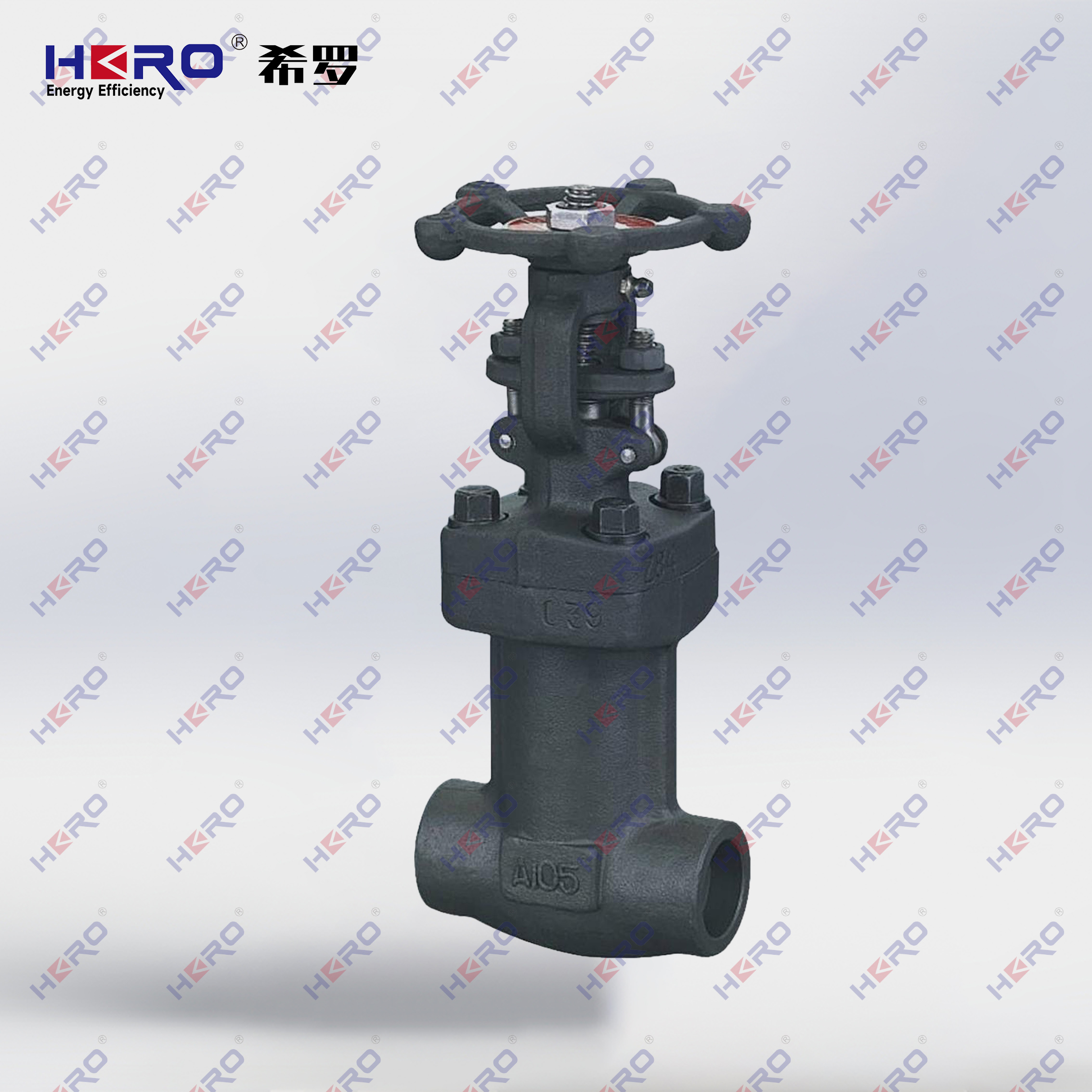
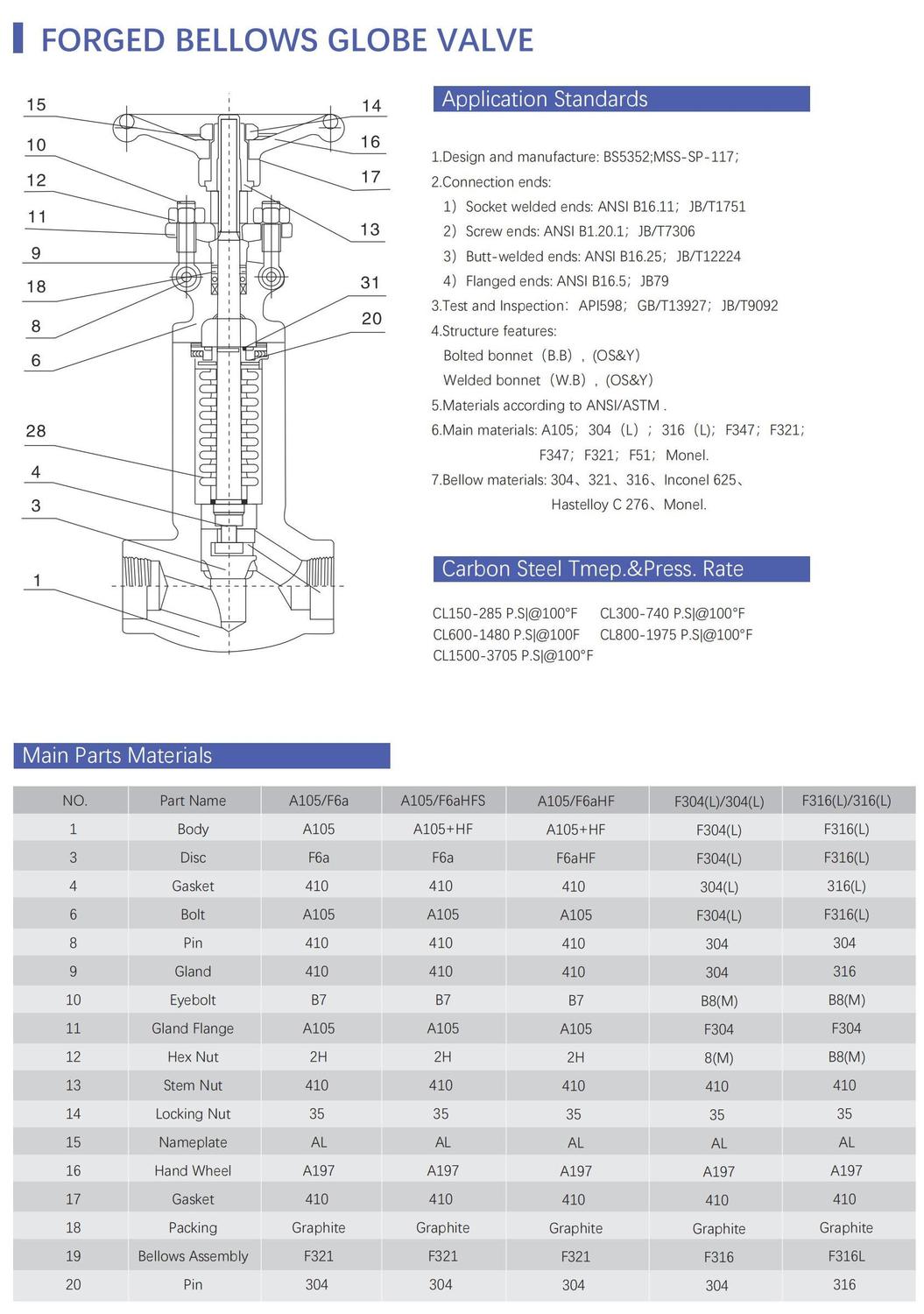
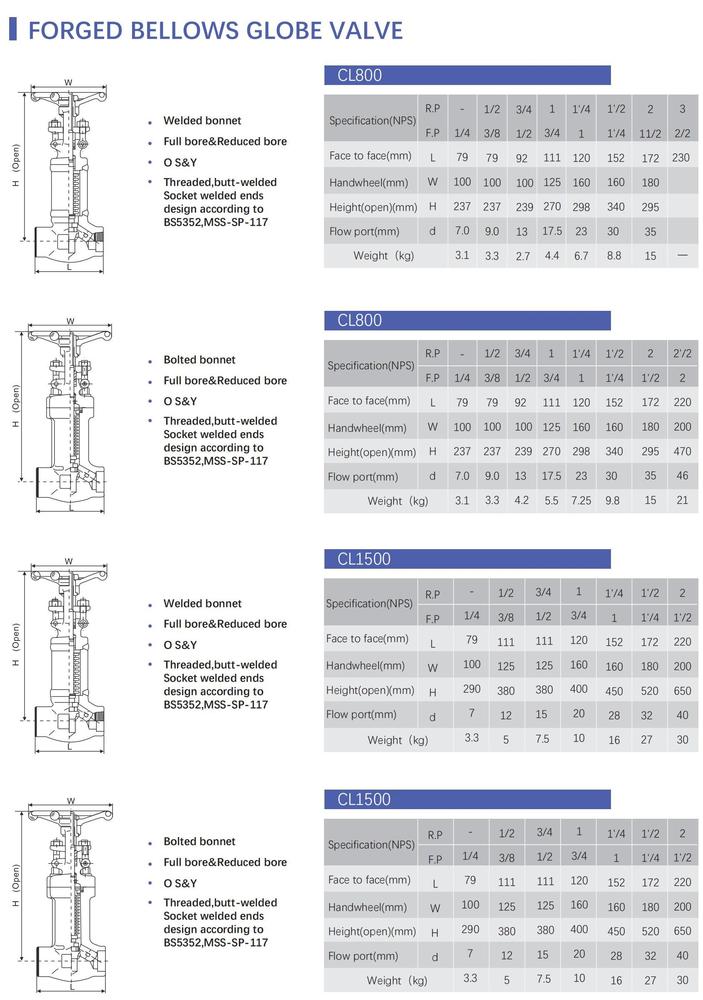
Valve Body: It is made of forged steel, featuring high strength and good corrosion resistance, capable of withstanding high - temperature and high - pressure working conditions. Different materials can be selected according to specific requirements, such as A105, A182F22, A182F304(L), A182F316(L), etc.
Bonnet: There are two types: bolted bonnet and welded bonnet. The bolted bonnet is connected to the valve body by bolts and nuts, and sealed with a spiral - wound gasket (manufactured with 316 and flexible graphite). Metal ring connections can be used for special requirements. The welded bonnet is connected to the valve body by threads and fully welded for sealing, and full - penetration welding connections can also be adopted.
Bellows Assembly: Generally made of multiple layers of thin stainless - steel sheets, one end is connected to the valve stem, and the other end is connected to the bonnet or valve body. It expands and contracts with the up - and - down movement of the valve stem to prevent the medium from leaking along the valve stem.
Valve Stem: Usually, materials such as A182F6 and A182F304 are selected. After quenching and tempering and surface nitriding treatment, it is connected to the bellows. By rotating the handwheel, the valve stem moves up and down to control the opening and closing of the valve.
Disc and Seat: The sealing surfaces of the disc and seat are often overlay - welded with Co - based hard alloy, which has excellent wear - resistance, corrosion - resistance, and anti - friction properties. When the valve is closed, they fit tightly to cut off the fluid.
Working Principle
By rotating the handwheel, the valve stem moves in a linear motion. When opening the valve, the valve stem rises upward, and the disc leaves the seat. The fluid flows from the inlet of the valve body through the internal passage and out from the outlet. When closing the valve, the valve stem moves downward, and the disc presses on the seat, blocking the fluid passage. During the movement of the valve stem, the bellows expands and contracts to ensure the sealing at the valve stem and prevent the medium from leaking.
Performance Characteristics
Dual - Seal Assurance: It adopts a dual - seal structure of bellows and packing. In case the bellows fails, the packing can prevent leakage. It complies with international sealing standards, reducing the risk of leakage.
High - Temperature and High - Pressure Resistance: The valve body is made of forged steel, enabling it to withstand high - temperature and high - pressure conditions. It is suitable for pipeline systems with high - temperature and high - pressure media such as steam and oil products.
Good Corrosion Resistance: The bellows and some parts are made of stainless steel, which has good resistance to corrosive media such as nitric acid and acetic acid.
Long Service Life: The sealing surface is overlay - welded with hard alloy, the valve stem is specially treated, and the bellows are durable. This reduces the number of maintenance times and operating costs.
Zero - Leakage Advantage: The bellows sealing design ensures zero leakage at the valve stem, avoiding fluid loss. It meets environmental protection requirements and can be used in pipeline systems transporting toxic, harmful, and valuable media.
Application Fields
Power Industry: In power generation systems such as thermal power and nuclear power plants, it is used in systems such as steam, condensate water, and feed water to cut off or connect the medium and ensure the normal operation of the system.
Petrochemical Industry: It is applicable to pipelines of various corrosive and non - corrosive media in petroleum refining and chemical production, such as the transportation control of crude oil, refined oil products, and chemical raw materials.
Pharmaceutical Industry: In the pharmaceutical process, it is used in pipeline systems of various liquid medicines, steam, compressed air, etc., meeting the high - precision sealing and hygiene requirements in the pharmaceutical process.
Other Fields: It can also be applied to pipeline systems in fields such as shipbuilding, heating, and refrigeration.
Selection Key Points
Based on Medium Characteristics: Select appropriate materials for the valve body, disc, and bellows according to the temperature, pressure, corrosiveness, and viscosity of the medium. For example, when transporting strong corrosive media such as nitric acid, stainless - steel materials such as A182F304(L) and A182F316(L) can be selected.
Consider Pressure and Diameter: Choose a valve with the corresponding pressure rating and diameter according to the working pressure and pipe diameter of the pipeline to ensure the sealing performance and flow capacity of the valve.
Determine the Connection Method: Select a suitable valve connection method, such as flange connection, socket - weld connection, or threaded connection, according to the pipeline connection form.
Select the Drive Method: Choose a drive method such as manual, electric, or pneumatic according to the operation requirements and on - site working conditions. Manual operation is suitable for occasions with infrequent operation, while electric and pneumatic drives are suitable for systems with remote control and high - degree automation.