The following is a detailed introduction to the forged steel bellows gate valve:
Structure and Working Principle
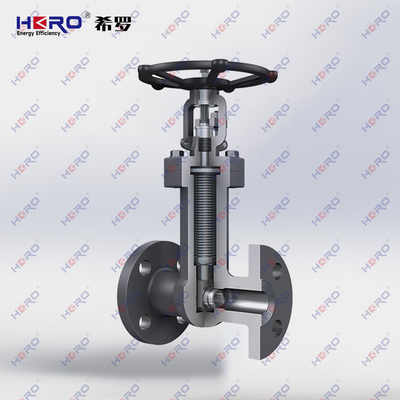
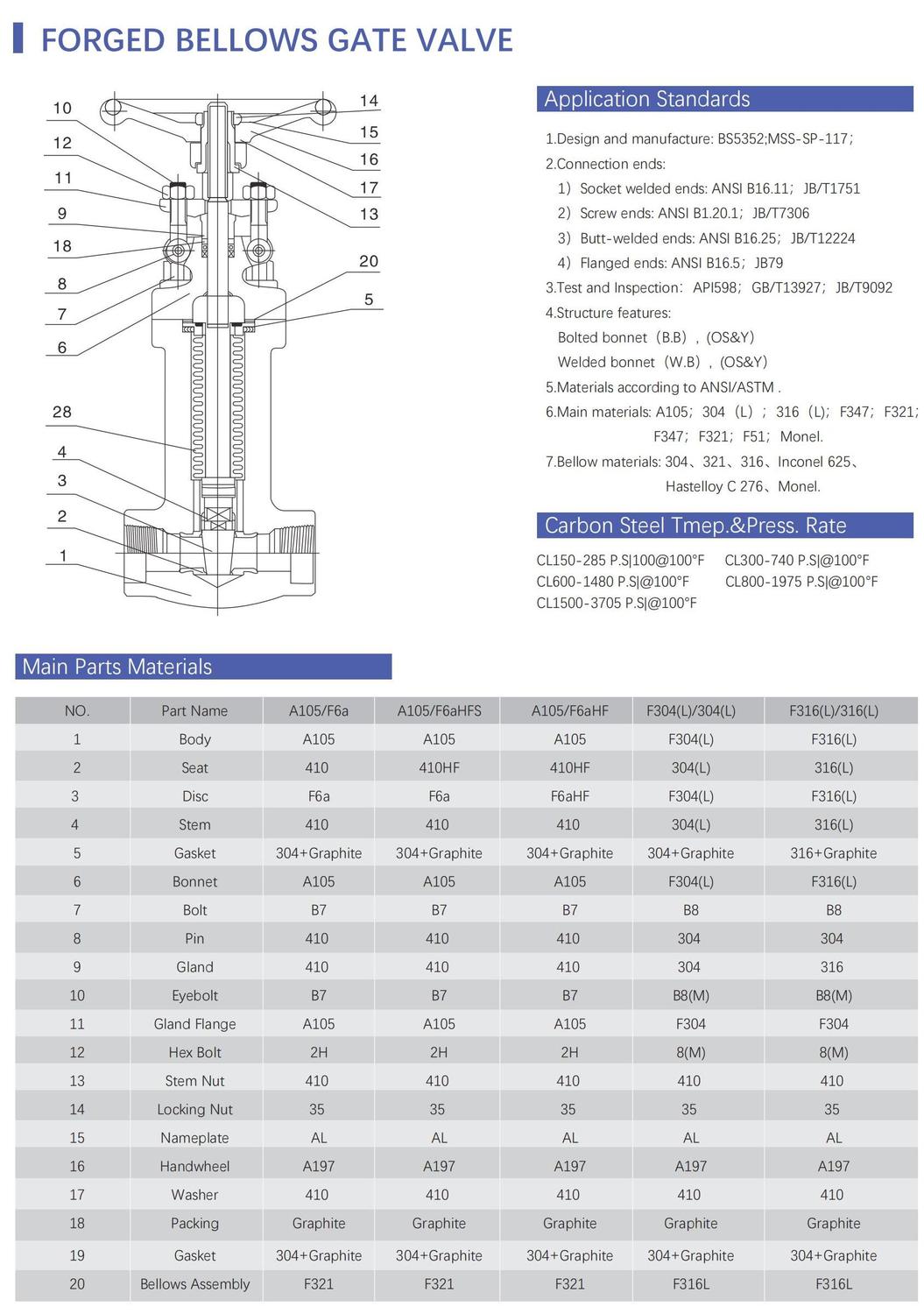
Structural Composition: It mainly consists of components such as the valve body, bonnet, bellows, valve stem, and handwheel. The valve body and bonnet are made of forged steel, which offers high strength and corrosion resistance. The bellows, a core component, is composed of multiple layers of thin stainless - steel sheets, featuring good elasticity and corrosion resistance.
Working Principle: The opening and closing of the valve are controlled by the up - and - down movement of the valve stem through the rotation of the handwheel. When the handwheel rotates counter - clockwise, the valve stem moves upward, compressing the bellows and closing the valve. When the handwheel rotates clockwise, the valve stem moves downward, stretching the bellows and opening the valve.
Characteristics
Excellent Sealing Performance: It adopts a bellows seal, supplemented by packing. In case the bellows fails, the packing can prevent leakage, meeting international sealing standards and effectively preventing medium leakage.
Long Service Life: The valve body, bonnet, etc. are made of forged steel with high strength and corrosion resistance. The key component, the bellows, is made of multiple layers of thin stainless - steel sheets, with good oxidation - resistance and fatigue - resistance, thus extending the overall service life of the valve.
Smooth and Shock - free Operation: The elasticity of the bellows enables smooth opening and closing of the valve, without generating impact and noise, reducing damage to the pipeline system. It is especially suitable for occasions with high requirements for noise and vibration control.
Wide Application Range: It can adapt to various media, including corrosive and high - temperature and high - pressure media, such as oil, natural gas, steam, hot water, heat - transfer oil, industrial water, etc. It also has a relatively wide working temperature range.
Simple Structure and Easy Maintenance: It has a relatively simple structure with a small number of components, facilitating installation, disassembly, and maintenance, and reducing maintenance costs and time.
Main Types
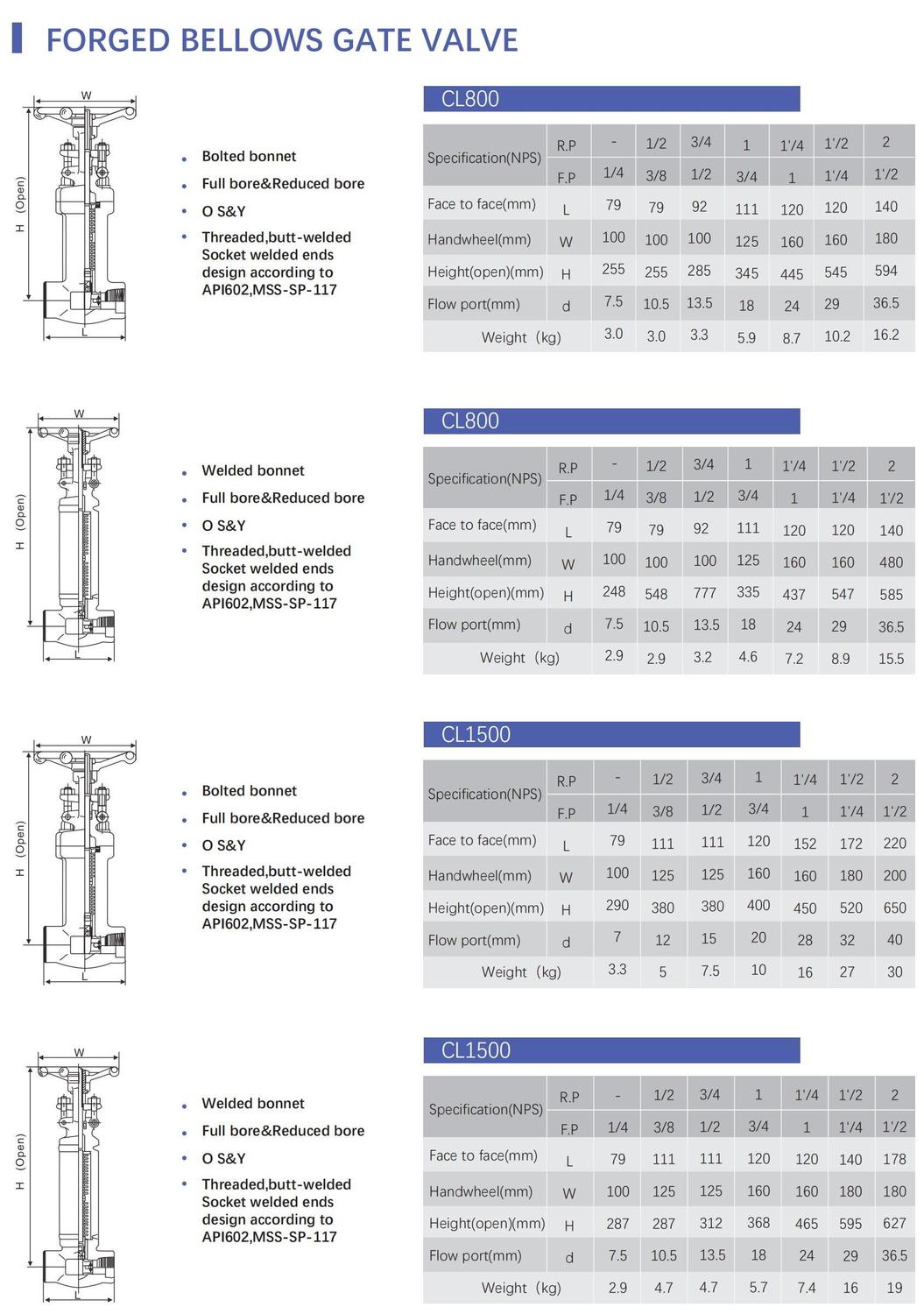
Bolted Bonnet Forged Steel Bellows Gate Valve: The valve body and bonnet are connected by bolts and nuts, and sealed with a spiral - wound gasket (manufactured with 304L and flexible graphite). Metal ring connections can also be used according to customer requirements.
Welded Bonnet Forged Steel Bellows Gate Valve: The valve body and bonnet are connected by threads and fully welded for sealing. In special cases, full - penetration welding connections can also be used. This design has better sealing performance and is suitable for more demanding working conditions.
Application Fields
Petrochemical Industry: It is used in the pipeline systems for the transportation and processing of oil and natural gas, and can control the flow of various corrosive and non - corrosive media.
Power Industry: In power generation processes such as thermal power generation and nuclear power generation, it is used in pipeline systems for media such as steam, hot water, and cooling water to ensure the safe and stable operation of the system.
Metallurgical Industry: In the production of steel, non - ferrous metals, etc., it is used to control the transportation and distribution of high - temperature and high - pressure media such as steam, gas, and oil products.
Other Fields: It is also widely used in the shipbuilding industry, exhaust gas purification devices, gas, steam equipment, vacuum equipment, hot water, heat - transfer oil applications, etc.
Selection Considerations
Medium Characteristics: Select appropriate materials and sealing forms according to the type, temperature, pressure, and corrosiveness of the medium to ensure that the valve can work properly in the corresponding medium.
Pressure and Diameter: Select a valve with an appropriate pressure rating and diameter according to the working pressure and pipe diameter of the pipeline system to ensure the sealing performance and flow capacity of the valve.
Connection Method: Select a valve connection method that matches the pipeline connection method, such as flange connection, socket - weld connection, or threaded connection.
Operation Requirements: Consider the operation method of the valve, such as manual, electric, or pneumatic, as well as the operation frequency and environmental requirements, and select a suitable driving device.
Maintenance Key Points
Regular Inspection: Regularly inspect the sealing performance of the valve, the condition of the bellows, and the wear of the valve stem, etc., and discover and handle potential problems in a timely manner.
Cleaning and Lubrication: Keep the valve surface clean, and regularly lubricate the moving parts such as the valve stem to prevent rust and jamming, ensuring smooth opening and closing of the valve.
Packing Replacement: When leakage is detected at the packing, replace the packing in a timely manner to ensure the sealing performance.
Bellows Protection: Avoid the bellows from being impacted by external forces or being over - stretched or compressed to prevent damage to the bellows and affect the valve performance.