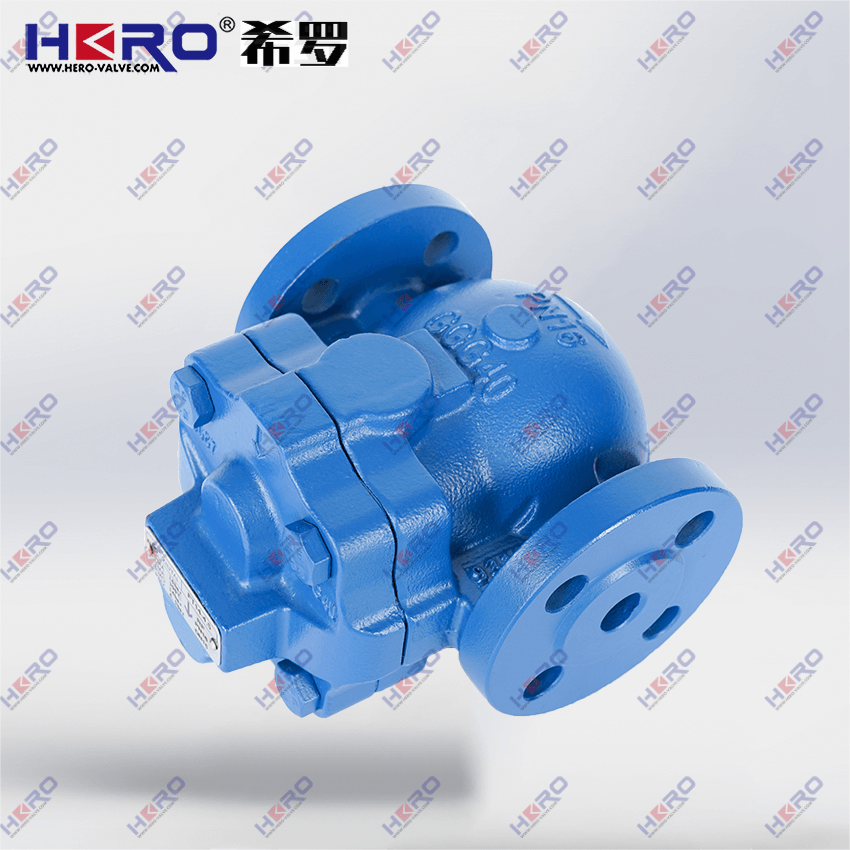
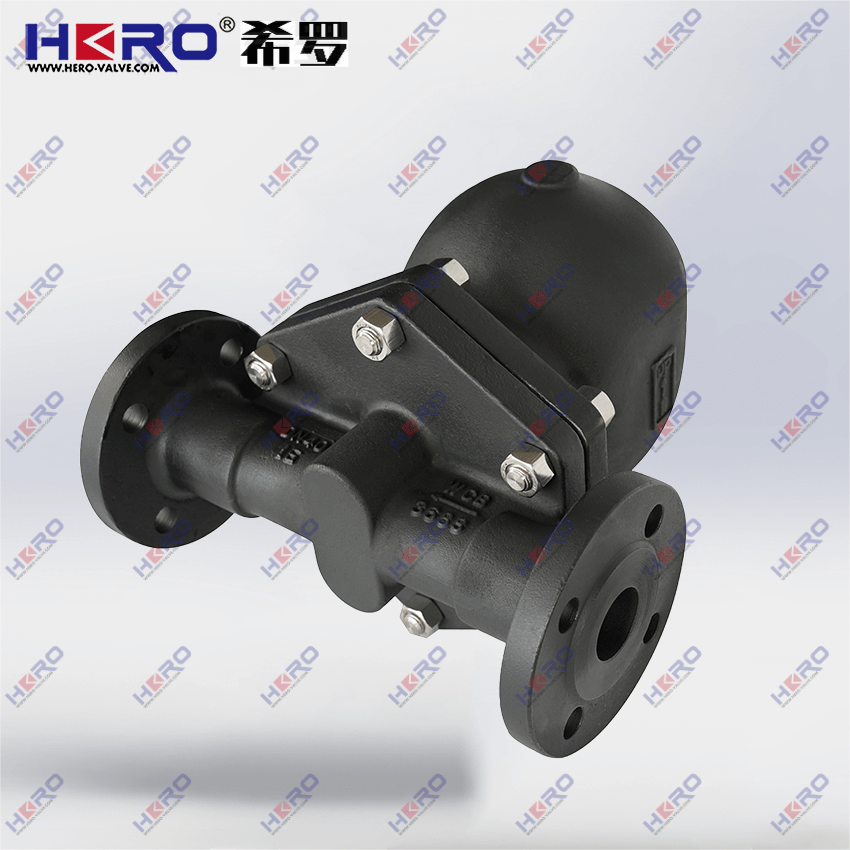
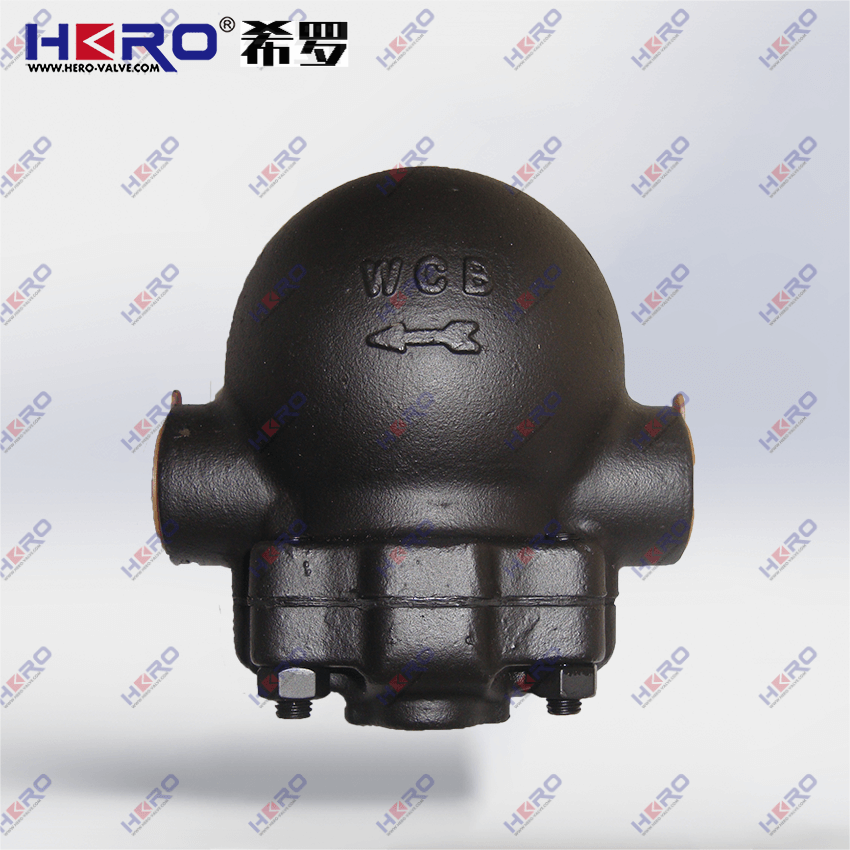
[FT14/44 Lever Float Steam Traps] - Widely applied and highly efficient in operation under both light and heavy loads of condensed water. Despite their small size, they continuously and efficiently discharge water, ensuring a large amount of heat transfer.
These types of valves are an excellent choice for drainage devices with automatic temperature control. (For FT14, the nominal diameter: DN15-DN25, and the drainage capacity: less than 2100kg/h)
The greatest advantage of the lever float steam trap is that it is not affected by fluctuations in pressure, temperature, and the flow rate of condensed water. It can drain water continuously, draining water as soon as it is available, with a minimum subcooling degree of 0℃, enabling the heating equipment to achieve the best working efficiency. The valve seat of the lever float steam trap is always below the liquid level, forming a water seal, and there is no steam leakage. Its minimum working pressure is 0.01Mpa, and the maximum backpressure rate is ≤85%. It is equipped with an internal air exhaust device. The lever float steam trap adopts an advanced bellows element as an automatic air exhaust valve, which can automatically remove non-condensable gases. It is very sensitive, has high working quality, and a long service life. This steam trap is designed with a balanced double-valve seat structure, which can achieve a large drainage capacity with a small volume, and is especially suitable for steam blocking and water drainage of large heating equipment and heat exchange station equipment. It is the preferred steam trap for large heating equipment. This valve uses double valve holes to relatively reduce the pressure when the valve core is opened, thus achieving a large drainage capacity. During operation, the float moves up and down with the change of the liquid level in the valve cavity, driving the lever to open or close the valve seat. Since the valve seat hole is below the condensed water level, a water seal is formed, and the water and steam are naturally separated, achieving no steam leakage.
Working Principle
Based on Archimedes' principle of buoyancy. When starting up, the automatic air exhaust device expels the non-condensable gases in the system. As steam and hot condensed water enter, the temperature inside the valve cavity rises, and the air exhaust device closes automatically. As the level of condensed water rises, the float rises accordingly. When the buoyancy force is greater than the self-weight of the float and the acting force on the valve port area, the float drives the lever to open the valve port, and the condensed water is discharged. During the drainage process, the liquid level drops, and the float descends due to its own weight, driving the lever to close the drainage valve seat hole, forming a water seal to prevent steam leakage.
Structural Features
Sealing and Durability: Adopting a rolled-in valve mechanism (new SCCV switching mode), it features excellent sealing performance and durability.
Small Volume with Large Drainage Capacity: With a balanced double-valve seat design, compared with ordinary steam traps, it has a smaller volume but a larger drainage capacity, showing obvious advantages in situations with extremely large drainage volumes.
Automatic Air Exhaust: Equipped with an internal bimetallic automatic air exhaust valve, it can prevent air blockage and steam locking.
Shortened Start-up Time: Some models are equipped with a unique U-shaped bimetallic ventilation port, which can significantly shorten the start-up time of the equipment.
Convenient Maintenance: All components are installed on the valve cover, allowing for maintenance without having to remove the valve from the pipeline.
Performance Advantages
Energy-saving and Efficient: It can drain water continuously. The valve seat is located below the liquid level, forming a water seal, effectively preventing steam leakage, reducing energy waste, achieving high thermal efficiency, and having a low steam leakage rate.
Stable Operation: It can automatically sense and expel condensed water and non-condensable gases, ensuring the stable operation of the steam system. It is less affected by fluctuations in pressure, temperature, and the flow rate of condensed water.
Good Air Exhaust Performance: The automatic air exhaust device can expel both hot and cold non-condensable gases, without the phenomenon of air locking, and operates stably with no noise.
Excellent Sealing Performance: The sealing elements adopt spherical sealing, resulting in no concentrated wear during operation and a long service life.
Wide Applicability: It is suitable for various working conditions and medium conditions, such as high temperature, high pressure, and corrosive media, etc. The subcooling degree of the drained water can reach 0°C, making it especially suitable for situations with a large amount of condensed water.
Application Scenarios
Widely applied in industrial fields such as petroleum, chemical industry, pharmaceuticals, food processing, and papermaking. Specifically, it is used in industrial steam heating equipment, various large heat exchangers, dryers, jacketed kettles, boilers, superheaters, steam turbine condensers, etc., and also in the boiler feed water and steam cut-off devices of urban heating pipeline networks, as well as systems that require continuous drainage of condensed water and air in the pipeline network.
Technical Parameters
FT43
Maximum Recommended Saturated Steam Working Pressure (PMO): 13 bar g
Nominal Pressure: For cast iron material - PN16; For cast steel material - PN16
Maximum Allowable Pressure (PMA): 16 bar g
Maximum Allowable Temperature (TMA): 220°C for cast iron; 300°C for cast steel
Minimum Allowable Temperature (TMI): -10°C
Maximum Working Pressure (PMO): 13 bar g
Maximum Working Temperature (TMO): 220°C for cast iron; 300°C for cast steel
Minimum Working Temperature (TMIO): 0°C
Minimum Working Pressure Difference (△PMX): FT43-4.5 is 4.5 bar; FT43-10 is 10 bar; FT43-14 is 14 bar
Maximum Cold State Test Pressure: 24 bar g
FT13
When the nominal diameter (DN) is usually 15-25 mm, the connection method is mostly threaded connection. The working pressure is generally 0.01-1.6 MPa, and the temperature can reach 250°C. For some models with flange connection, the nominal diameter can be larger. The parameter range is similar to that of FT43, but there may be certain differences in products from different manufacturers.
Installation and Maintenance
Installation
Generally, it needs to be installed horizontally at the low point of the pipeline, with the flow direction consistent with the direction indicated on the valve body.
The installation position should be close to the heating equipment, and the pipeline should be cleaned to remove debris before installation.
The diameter of the pipeline should not be smaller than the nominal diameter of this valve.
Each heating device should be equipped with its own steam trap to avoid mutual interference.
Maintenance
Regularly check the sealing performance of the valve, the flexibility of the float, and the working status of the automatic air exhaust device to ensure there is no blockage by impurities.
Check whether all components are worn or damaged, and replace the faulty components in a timely manner.