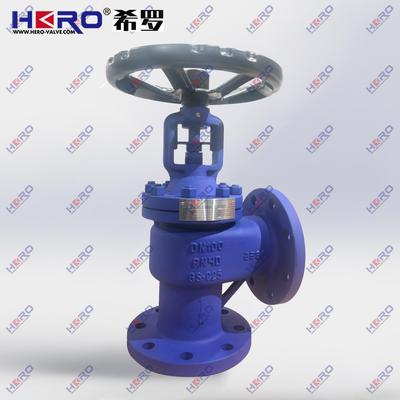
The angle bellows globe valve is a new type of globe valve. The following will provide a detailed introduction from aspects such as its structural characteristics, working principle, application fields, etc.
Structural Characteristics
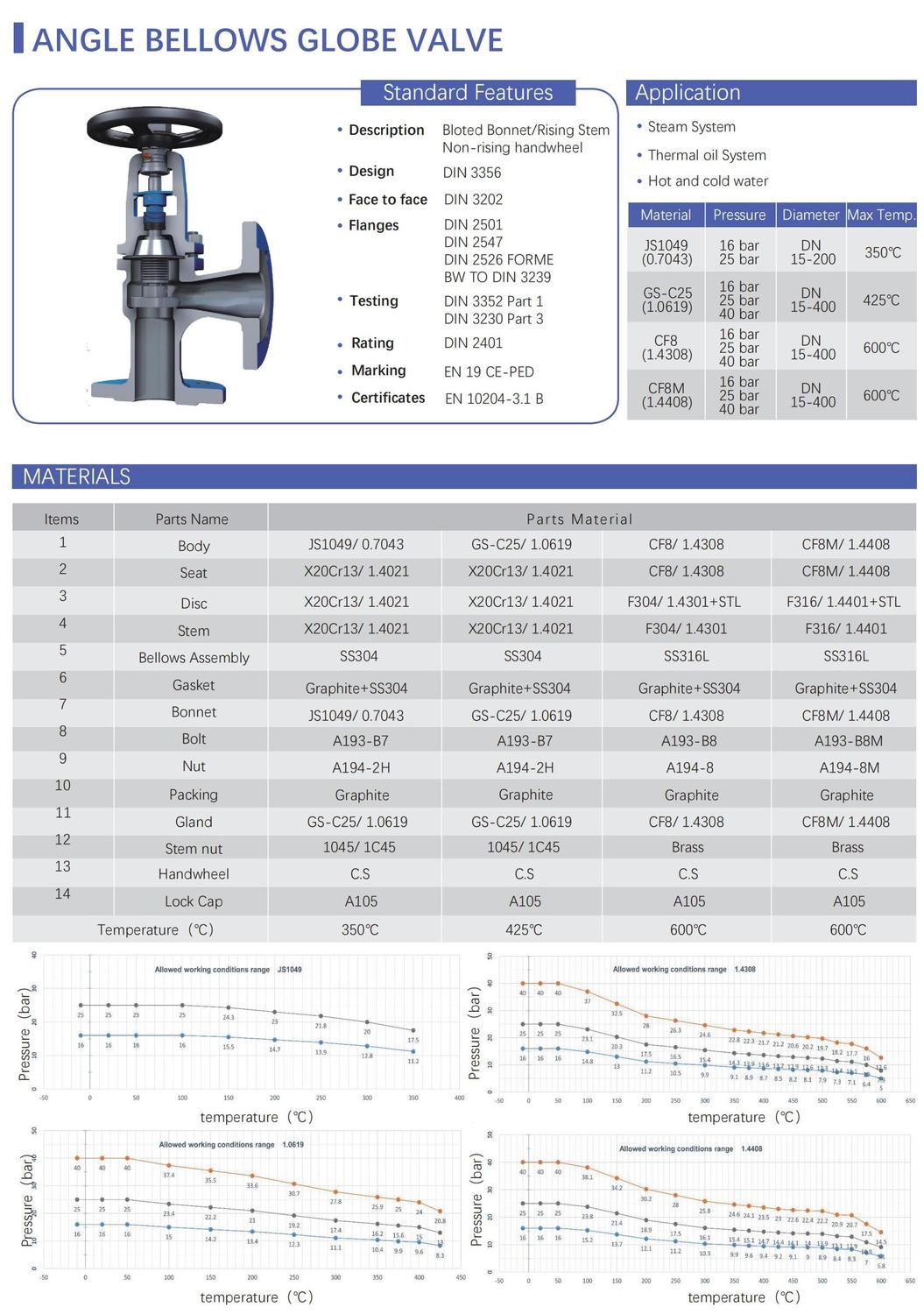
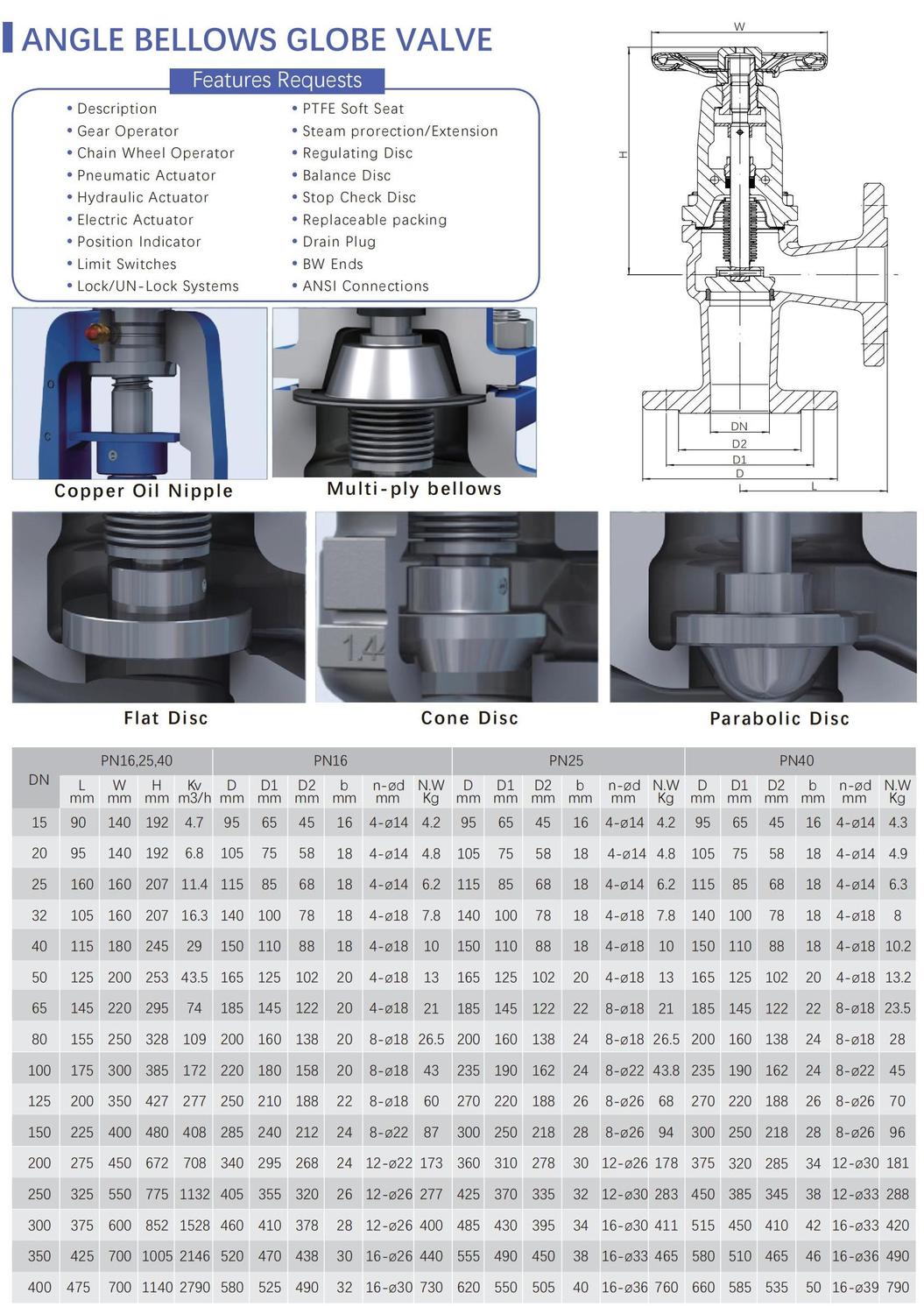
Dual - seal Design It adopts a dual - seal structure of bellows and packing. If the bellows fails, the valve stem packing can serve as the second - line defense to prevent leakage, ensuring reliable sealing performance.
High - quality Sealing Surface The sealing surface is surfacing - welded with Co - based hard alloy, which has excellent wear - resistance, corrosion - resistance and good anti - friction performance, thus extending the service life of the valve.
Valve Stem Treatment The valve stem undergoes quenching and tempering as well as surface nitriding treatment, having good corrosion - resistance and anti - friction performance, which can guarantee the normal lifting and lowering of the valve stem and the sealing effect.
Valve Stem Lifting Indicator It is equipped with a valve stem lifting position indication device, which can more intuitively understand the opening and closing state of the valve.
Material Optional Configuration The materials of parts, flange and butt - welding code dimensions can be reasonably selected according to the actual working conditions or user requirements to meet various engineering needs.
Ergonomic Design Some angle bellows globe valves adopt an ergonomic design handwheel, which is easy and convenient to operate, and more safe and reliable.
Working Principle
Opening Process When the operating handle rotates counter - clockwise, the gear drives the screw to move upward. The bellows elongates under the tensile force, and the valve disc rises accordingly, allowing the medium to flow freely.
Closing Process When the operating handle rotates clockwise, the gear drives the screw to move downward. The bellows shortens under the extrusion force, and the valve disc descends, blocking the flow of the medium and achieving the cut - off function.
Performance Parameters
Nominal Pressure Generally applicable to working conditions with a nominal pressure of PN1.6 - 16MPa.
Operating Temperature The normal operating temperature range is usually - 29 - 350°C. Some valves made of special materials can adapt to a wider temperature range.
Applicable Media It is suitable for various media such as water, steam, oil products, petroleum, chemical raw materials, etc.
Application Fields
Petrochemical Industry It is used in the pipeline for the transportation of petroleum and chemical products. It can effectively control the flow of fluids, prevent leakage, and ensure production safety.
Pharmaceutical Industry In the pharmaceutical process, it is used in the pipeline systems of various fluid media, meeting the strict requirements for tightness and cleanliness in the pharmaceutical production process.
Fertilizer Industry It can be applied to the raw material transportation and finished product transportation links in the fertilizer production process, ensuring the continuity and stability of production.
Power Industry In power generation, it is used in the pipeline systems of media such as steam and condensate water, helping to improve energy utilization efficiency and reduce leakage losses.
Other Fields It is also widely used in industrial fields such as chemical fiber textile, plastic paper - making, printing and dyeing rubber, and food.
Installation and Maintenance
Installation It can be installed on horizontal or vertical pipelines. However, it should be noted that the inlet and outlet directions of the valve should be consistent with the flow direction of the medium. At the same time, sufficient space should be reserved for operation and maintenance.
Maintenance Regularly check the sealing performance of the valve, the lifting and lowering of the valve stem, and the condition of the bellows. If there is leakage or abnormality, it should be dealt with in a timely manner. Lubricate parts such as the valve stem, nut, and shaft sleeve to extend the service life of the valve.